
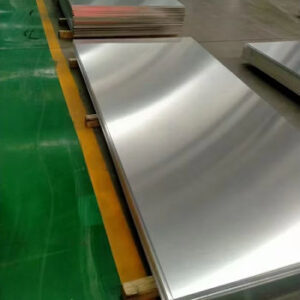
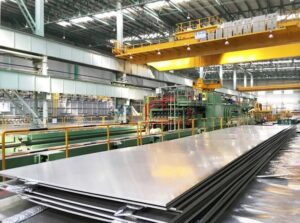
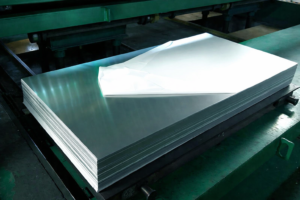
Aluminum sheets are used in construction, transportation, marine equipment, machinery, signage, electronics, packaging, and general fabrication. But when buyers search for aluminum sheet sizes, they usually need more than a size chart. They need to know which thickness, alloy, temper, surface finish, tolerance, and packing method will reduce risk in real purchasing.
This guide upgrades the topic from a basic material introduction into a practical buying guide for industrial and commercial buyers. It covers standard dimensions, thickness options, gauge conversion, alloy selection, manufacturing experience, quality control, cost-saving tips, common buying mistakes, and quotation preparation.
For available products, you can also visit the aluminum sheet and plate catalog.
Table of Contents
- What is an aluminum sheet?
- Standard aluminum sheet sizes and metric equivalents
- Aluminum sheet thickness and gauge conversion
- Sheet vs plate vs coil
- How to choose alloy, temper, and surface finish
- Manufacturer tips, buying mistakes, and cost-saving advice
- Production process, quality control, packing, and export workflow
- Quotation checklist, FAQs, image recommendations, and schema suggestions
- Conclusion
What Is an Aluminum Sheet?
An aluminum sheet is a flat-rolled aluminum product that is thicker than foil but usually thinner than plate. Exact definitions can vary by market, product standard, and supplier, so buyers should confirm the actual thickness, alloy, temper, tolerance, and applicable standard before placing an order.
| Product Type | Typical Thickness Range | Common Uses |
| Aluminum foil | Below 0.2 mm | Packaging, insulation, food wrapping |
| Aluminum sheet | About 0.2 mm to 6 mm | Panels, covers, cabinets, signage, fabrication |
| Aluminum plate | Above 6 mm | Structural parts, molds, machinery, aerospace components |
Common Aluminum Sheet Sizes
Standard aluminum sheet sizes vary by country, mill capability, warehouse stock, and end-use industry. In global trade, 4 x 8 ft is one of the most requested sizes because it is easy to transport, store, cut, and process. Metric sizes such as 1000 x 2000 mm, 1220 x 2440 mm, 1250 x 2500 mm, and 1500 x 3000 mm are also common.
| Standard Size | Inches | Millimeters | Common Applications |
| 4 x 8 ft | 48 x 96 in | 1220 x 2440 mm | Panels, signs, fabrication, enclosures |
| 4 x 10 ft | 48 x 120 in | 1220 x 3050 mm | Wall panels, trailer parts, construction |
| 5 x 10 ft | 60 x 120 in | 1524 x 3050 mm | Large panels, transport equipment |
| 1000 x 2000 mm | 39.4 x 78.7 in | 1000 x 2000 mm | General industrial fabrication |
| 1250 x 2500 mm | 49.2 x 98.4 in | 1250 x 2500 mm | Machinery, cabinets, architectural use |
| 1500 x 3000 mm | 59.1 x 118.1 in | 1500 x 3000 mm | Large-format processing and fewer joints |
| zggdmetal Manufacturer Tip If the final part size is close to a metric sheet format, ask the alumiunm supplier to compare 1220 x 2440 mm, 1250 x 2500 mm, and custom-cut options. A small size change can reduce scrap, cutting time, and shipping waste. |
Aluminum Sheet Thickness Options
Thickness affects strength, weight, bendability, cost, cutting speed, welding performance, and final rigidity. For general sheet metal work, 1.0-3.0 mm is widely used. For flooring, heavy-duty panels, vehicle parts, and marine components, 3.0-6.0 mm may be selected. Above 6 mm, Purchasing aluminum plates is a better option.
| Thickness in Inches | Thickness in Millimeters | Typical Use |
| 0.020 in | 0.5 mm | Light covers, signs, decorative use |
| 0.032 in | 0.8 mm | Panels and light-duty fabrication |
| 0.040 in | 1.0 mm | Enclosures, trim, interior panels |
| 0.063 in | 1.6 mm | General fabrication and machine covers |
| 0.080 in | 2.0 mm | Structural panels, cabinets, vehicle parts |
| 0.100 in | 2.5 mm | Stronger fabricated parts |
| 0.125 in | 3.0 mm | 1/8 aluminum sheet, brackets, flooring |
| 0.190 in | 4.8 mm | Heavy-duty panels and transport parts |
| 0.250 in | 6.35 mm | Thick sheet or light plate applications |
Aluminum Sheet Gauge vs Thickness
Some buyers describe aluminum sheet by gauge. Gauge can be confusing because a higher gauge number usually means a thinner sheet, and gauge systems can differ between materials. For international RFQs, specify thickness directly in millimeters or inches.
| Gauge | Approx. Inches | Approx. Millimeters |
| 8 gauge | 0.1285 in | 3.26 mm |
| 10 gauge | 0.1019 in | 2.59 mm |
| 11 gauge | 0.0907 in | 2.30 mm |
| 12 gauge | 0.0808 in | 2.05 mm |
| 14 gauge | 0.0641 in | 1.63 mm |
| 16 gauge | 0.0508 in | 1.29 mm |
| 18 gauge | 0.0403 in | 1.02 mm |
| 20 gauge | 0.0320 in | 0.81 mm |
| 22 gauge | 0.0253 in | 0.64 mm |
| 24 gauge | 0.0201 in | 0.51 mm |
Aluminum Sheet vs Plate vs Coil
Buyers often compare sheet, plate, and coil when selecting aluminum flat products. The right choice depends on thickness, processing method, storage, and production workflow.
| Comparison | Aluminum Sheet | Aluminum Plate | Aluminum Coil |
| Thickness | Usually 0.2-6 mm | Usually above 6 mm | Thin to medium thickness supplied in coil form |
| Processing | Cutting, bending, punching, coating | Machining, heavy fabrication, structural use | Slitting, stamping, continuous production |
| Best for | Panels, covers, cabinets, signs | Load-bearing parts, molds, machinery | High-volume parts and roll-forming |
| Buying note | Confirm flatness and surface | Confirm ultrasonic or mechanical requirements if needed | Confirm inner diameter, coil weight, and edge condition |
Popular Aluminum Sheet Alloys
Different alloys provide different strength, corrosion resistance, formability, weldability, and surface performance. The best alloy depends on the application and processing route, not only the price.
| Alloy | Main Features | Common Applications |
| 1050 / 1060 | High purity, excellent workability, good conductivity | Electrical parts, chemical equipment, reflectors |
| 1100 | Soft, highly formable, corrosion resistant | Food equipment, decorative panels, general sheet metal |
| 3003 | Good corrosion resistance and better strength than 1000 series | Roofing, tanks, cabinets, heat exchangers |
| 5052 | Excellent corrosion resistance, good fatigue strength | Marine parts, vehicle panels, fuel tanks |
| 5083 | High strength and marine-grade corrosion resistance | Shipbuilding, pressure vessels, transport equipment |
| 6061 | Good strength, machinability, weldability | Structural parts, machinery, fixtures |
| 6063 | Good surface finish and architectural use | Decorative panels and architectural parts |
| 7075 | Very high strength, aerospace-grade alloy | Aircraft parts and high-stress components |
Expert Alloy Recommendations
| Buyer Need | Recommended Direction | Why |
| General economical fabrication | 3003 or 1100 | Good formability and corrosion resistance for non-structural parts |
| Marine or humid environment | 5052 or 5083 | Better corrosion resistance and fatigue performance |
| Structural strength | 6061-T6 or plate-grade options | Higher strength and machinability for load-bearing parts |
| Easy bending | O, H111, H32, or suitable soft temper | Hard tempers can crack when bent with small radius |
| Decorative surface | Anodized, brushed, mirror, or painted sheet | Surface finish becomes part of the final product quality |
Temper, Surface Finish, and Processing Options
The aluminum alloy is only part of the specification. Temper and surface finish can change fabrication results significantly. A sheet that works for CNC machining may not be ideal for tight-radius bending. A mill-finish sheet may be suitable for hidden parts, while visible panels often require protective film or a controlled surface finish.
| Requirement | Specification Items to Confirm |
| Bending | Alloy, temper, bend radius, grain direction, crack risk |
| Laser or water-jet cutting | Thickness tolerance, flatness, protective film, surface cleanliness |
| CNC machining | Alloy strength, temper, flatness, residual stress |
| Welding | Alloy compatibility, filler material, distortion control |
| Anodizing | Alloy suitability, surface consistency, color expectation |
| Painting or PVDF/PE coating | Pretreatment, coating thickness, color, adhesion, outdoor exposure |
| Visible decorative panels | Brushed finish, mirror finish, PVC film, surface defect standard |
How to Choose the Right Aluminum Sheet Size
Choosing the right aluminum sheet size is not only about length and width.Project procurement personnel will conduct a comprehensive evaluation of its specifications: application, load, environment, processing method, target cost, waste rate, packaging, and shipping method.
- Confirm the application and whether the part is decorative, protective, structural, marine, food-grade, or electrical.
- Select the thickness based on rigidity, weight limit, dent resistance, and fabrication method.
- Choose the alloy and temper based on corrosion resistance, strength, formability, welding, or machining needs.
- Compare standard size, large-format sheet, and custom-cut sheet to reduce scrap.
- Confirm tolerance, flatness, surface finish, edge condition, protective film, and packing.
- Request the applicable standard and documents, such as ASTM B209, EN 485, GB/T 3880, mill test certificate, or inspection report.
| Application | Recommended Considerations |
| Signage | Surface quality, flatness, paintability, weather resistance |
| Machine cover | Thickness, formability, strength, scratch protection |
| Marine component | Corrosion resistance, alloy selection, welding performance |
| Vehicle panel | Weight, fatigue resistance, strength, dent resistance |
| Food equipment | Clean surface, corrosion resistance, applicable hygiene requirement |
| Electrical part | Conductivity, purity, formability, surface cleanliness |
Common Buying Mistakes
Many aluminum sheet problems are caused by incomplete specifications rather than supplier intention. A clear RFQ reduces misunderstanding and avoids delays.
| Mistake | Possible Result | Better Practice |
| Choosing alloy only by price | Poor corrosion resistance or weak performance | Match alloy to application and environment |
| Ignoring temper | Cracking during bending or insufficient strength | Confirm temper and processing method before ordering |
| Using gauge without metric thickness | Wrong thickness in international trade | Specify millimeters or inches in the RFQ |
| Ignoring tolerance and flatness | Problems during cutting, assembly, or CNC processing | State thickness tolerance, flatness, and standard |
| Not confirming surface finish | Visible scratches or inconsistent appearance | Specify mill finish, brushed, anodized, painted, or film-protected sheet |
| Forgetting packing and destination port | Higher damage risk or inaccurate freight cost | Confirm export packing, pallet size, container loading, and port |
How to reduce aluminum sheet costs without compromising quality?
- Compare standard sheet size and custom-cut size before ordering. Custom cutting may reduce waste even if the unit price is slightly higher.
- Avoid over-specifying thickness. A sheet that is too thick increases material cost, freight cost, and processing difficulty.
- Group similar thicknesses and alloys into one shipment to reduce logistics cost.
- Ask whether the required size is stock material or mill-production material. Stock sizes usually have shorter lead time.
- Use protective film only where needed. It protects visible surfaces but adds cost.
- Confirm pallet weight, loading method, and container plan before shipment to reduce handling damage.
| Customer Story Template The South American client initially requested 4 x 8-foot sheet metal for panel cutting. After reviewing the sheet specifications and shipping layout, zggdmetal recommended using 1250 x 2500 mm sheet metal. This change reduced scrap, improved cutting efficiency, and lowered total landed cost, saving approximately $8,000. |
Our Manufacturing Experience
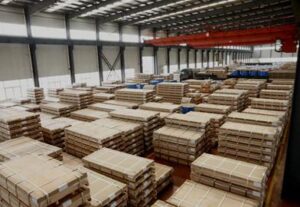
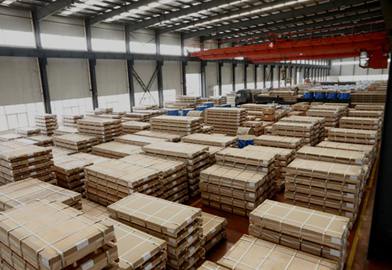
Zggdmetal is a factory-direct aluminum sheet and plate manufacturer in Foshan, China, with more than 20 years of export experience. We operate four warehouses and 12 production lines, supported by a team of more than 100 employees and an annual output capacity of approximately 20,000 metric tons.
Our facility is equipped with 8 uncoilers, 8 leveling machines, 12 laser cutting machines, and 6 punching and shearing machines. We keep stable stock sizes for regular demand, and we can usually confirm delivery within 12 to 30 days after order confirmation, depending on the production schedule. For the latest inventory details, please contact us directly.
Production Process and Quality Control
A practical manufacturing section improves trust because it shows buyers how the sheet is produced and inspected before shipment.
- Hot rolling or casting preparation
- Cold rolling to target thickness
- Annealing or temper control when required
- Leveling for flatness improvement
- Cutting or slitting to ordered size
- Thickness, surface, and flatness inspection
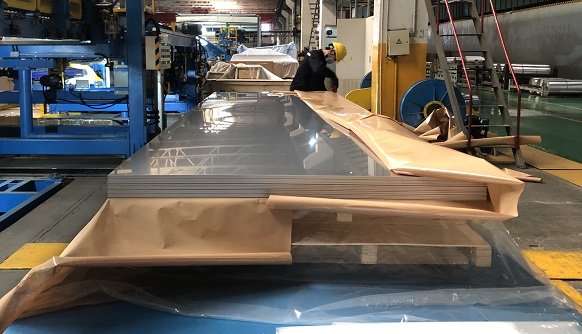
- Packing with PVC film, waterproof paper, wooden pallet, or export packing
- Container loading and shipping document preparation
| QC Item | What to Check | Buyer Benefit |
| Thickness inspection | Micrometer or gauge measurement against tolerance | Avoids mismatch in bending, assembly, and weight calculation |
| Flatness | Visual and measurement checks after leveling | Improves cutting, CNC machining, and visible panel appearance |
| Surface quality | Scratches, oil stain, oxidation, color consistency | Reduces rejection for decorative or exposed parts |
| Mechanical properties | Yield strength, tensile strength, elongation, hardness where required | Confirms performance for structural or forming applications |
| Documentation | MTC, standard compliance, third-party test where needed | Supports traceability and import/customs requirements |
Standards, Certifications, and Entity Coverage
For stronger topical authority and clearer procurement communication, include relevant standards, certifications, and processing entities where they apply. Do not list certifications that the company cannot provide.
| Category | Entities to Include Where Relevant |
| Standards | ASTM B209, EN 485, GB/T 3880, AMS 4027 |
| Certifications | ISO 9001, SGS, TUV, RoHS, REACH |
| Processing | Laser cutting, water jet, CNC machining, bending, welding, anodizing, brushing, mirror finish, PVDF coating, PE coating |
| Packing | PVC film, wooden pallet, export packing, container loading |
| Testing | Yield strength, tensile strength, hardness, flatness, tolerance, surface inspection |
Standard Size or Custom Cut Aluminum Sheet?
Standard sizes are usually faster and more cost-effective when the project can accept common dimensions. Custom-cut sheets are useful when buyers need specific dimensions to reduce waste, shorten processing time, or support OEM production.
| Option | Advantages | Best For |
| Standard size sheet | Lower cost, faster delivery, common stock | General fabrication and resale |
| Custom cut sheet | Less waste and ready for processing | OEM parts and precision projects |
| Large-format sheet | Fewer joints and better coverage | Panels, transport, construction |
| Small cut pieces | Easy handling and lower workshop processing | Repairs, prototypes, small batches |
Buying Checklist for Aluminum Sheet RFQs
Before requesting a quotation, prepare the following information. A complete RFQ helps suppliers quote faster and reduces the chance of material mismatch.
| Item | Example |
| Alloy | 1050, 3003, 5052, 5083, 6061 |
| Temper | O, H14, H24, H32, T6 |
| Thickness | 1.0 mm, 2.0 mm, 3.0 mm, 1/8 in |
| Width and length | 1220 x 2440 mm, 1250 x 2500 mm, 4 x 8 ft |
| Quantity | Pieces, sheets, tons, container load |
| Surface | Mill finish, brushed, anodized, painted, PVC film |
| Standard | ASTM B209, EN 485, GB/T 3880, or project requirement |
| Processing | Cutting, bending, coating, film protection |
| Packing | Wooden pallet, waterproof packaging, export packing |
| Shipping | Destination port, Incoterms, required lead time |
| Application | Marine, construction, machinery, signage, vehicle panel |
Procurement Workflow
- Send RFQ with complete specifications.
- Supplier confirms availability, production route, tolerance, packing, and lead time.
- Buyer reviews quotation, payment terms, Incoterms, and technical documents.
- Sample or pre-production confirmation is arranged when needed.
- Mass production, cutting, inspection, and packing are completed.
- Supplier provides documents such as packing list, invoice, MTC, and inspection report.
- Shipment, container loading, and after-sales support are arranged.
Why Choose Zggdetal?
We serve large-volume project buyers in more than 40 countries and understand the practical needs of export orders, including stable supply, production consistency, and dependable processing support. Whether you need standard sizes or custom-cut aluminum sheets, our team can respond quickly and follow your order closely from quotation to shipment.
To support procurement and project inspection, we can provide product test certificates, support third-party inspection reports, and supply quality documents such as ISO 9001, SGS, and TUV. If your project depends on factory-direct communication, consistent stock planning, and reliable delivery, Zggdmetal is ready to support your business.
Common Applications of Aluminum Sheet
| Industry | Uses |
| Construction | Roofing, wall panels, ceiling panels, curtain walls |
| Transportation | Trailer panels, vehicle bodies, flooring, covers |
| Marine | Boat panels, decks, fuel tanks, structural components |
| Machinery | Guards, covers, cabinets, brackets |
| Packaging | Containers, closures, foil-related products |
| Electronics | Enclosures, heat dissipation parts |
| Signage | Road signs, advertising panels, nameplates |
| Aerospace | Structural panels, interior components, precision parts |

FAQ About Aluminum Sheet Sizes
What is the most common aluminum sheet size?
The most common aluminum sheet size is 4 x 8 ft, equal to 48 x 96 inches or approximately 1220 x 2440 mm.
How thick is 1/8 aluminum sheet?
1/8 inch aluminum sheet is approximately 0.125 in or 3.0 mm thick. Actual strength depends on alloy and temper.
What thickness is aluminum sheet metal?
Aluminum sheet metal commonly ranges from about 0.2 mm to 6 mm. Thinner material may be considered foil, while thicker material is often classified as plate.
Can aluminum sheet rust?
Aluminum does not rust like steel because it contains no iron, but it can corrode in certain environments. Alloy selection and surface treatment are important.
Which aluminum sheet alloy is easiest to bend?
Softer tempers such as O, H111, or some H32/H14 conditions are generally easier to bend than hard tempers. Always confirm bend radius and alloy suitability.
What alloy is best for marine aluminum sheet?
5052 and 5083 are common marine choices because they offer good corrosion resistance. The best grade depends on strength, welding, and project requirements.
What is ASTM B209?
ASTM B209 is a commonly referenced standard specification for aluminum and aluminum-alloy sheet and plate.
Can aluminum sheet be anodized?
Yes, many aluminum sheets can be anodized, but surface consistency and alloy choice affect the final appearance.
Can you custom cut aluminum sheet?
Yes, We can provide custom cutting. Buyers should provide length, width, tolerance, quantity, edge condition, and packing requirements.
How much does aluminum sheet weigh?
Weight depends on alloy density, thickness, width, and length. For quick estimation, use thickness x width x length x density, then confirm with the supplier.
Conclusion
Understanding aluminum sheet sizes is essential for selecting the right material, controlling cost, and ensuring good performance in fabrication. Buyers should compare not only length and width, but also aluminum sheet thickness, alloy, temper, tolerance, surface finish, and processing requirements.
If you need standard or custom aluminum sheets for industrial applications, view our aluminum sheet and plate products or contact our team for size, alloy, and quotation support.