
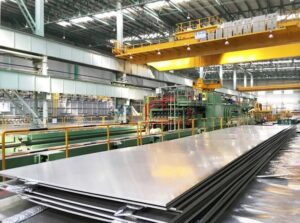
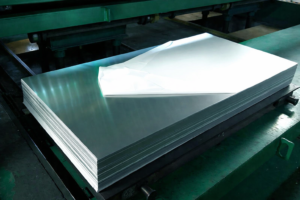
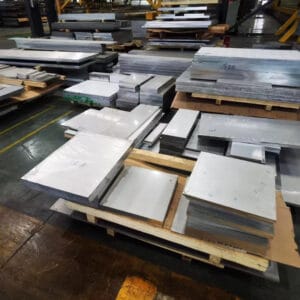

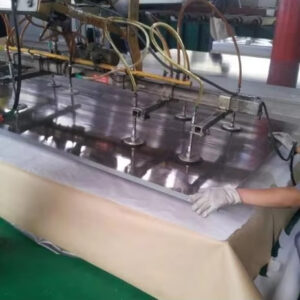
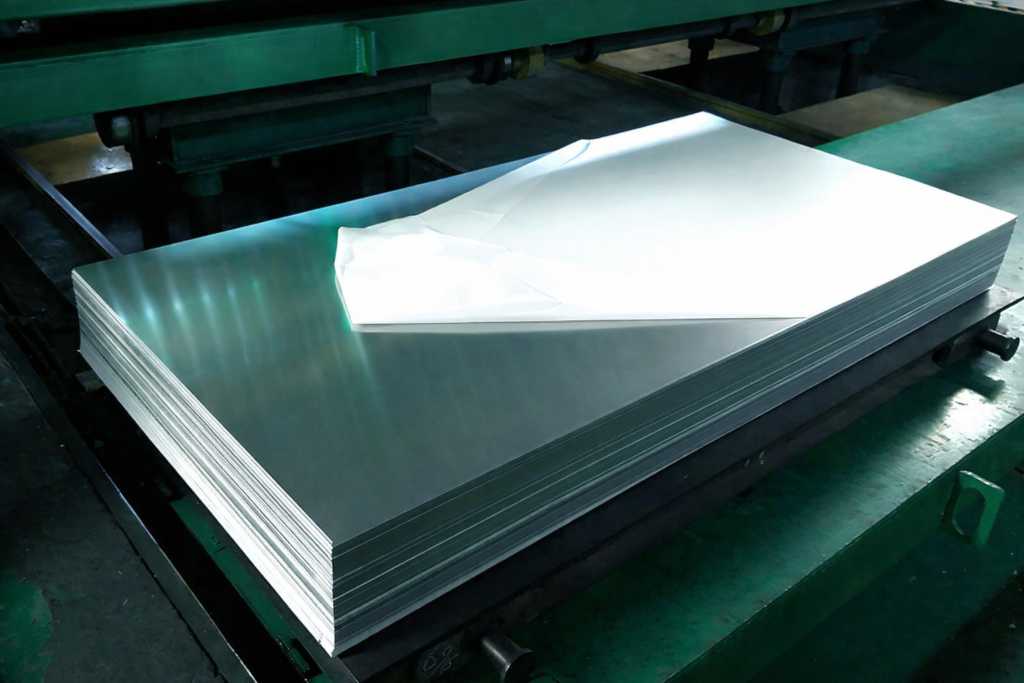
5052-H32 aluminum sheet is produced through a controlled sequence of alloy preparation, direct-chill casting, homogenization, hot rolling, cold rolling, stabilization, finishing, and inspection. The alloy is strengthened by cold work rather than precipitation heat treatment. For buyers, the most useful production records are the alloy designation, temper, thickness tolerance, surface condition, mechanical test results, and applicable product standard.
Key Takeaways
- 5052 is a non-heat-treatable aluminum-magnesium alloy; its H32 condition is obtained through strain hardening followed by stabilization.
- Casting and homogenization prepare a consistent slab or ingot for rolling. They do not, by themselves, create the final H32 temper.
- Hot rolling reduces the cast section and controls the starting structure for later cold rolling.
- Cold rolling sets the final gauge, surface condition, and work-hardening level.
- A reliable purchase specification should define alloy, temper, thickness, width, flatness, surface finish, testing standard, packaging, and traceability.
Table of Contents
- What does 5052-H32 mean?
- Step 1: Alloy preparation and melting
- Step 2: Direct-chill casting and homogenization
- Step 3: Hot rolling
- Step 4: Cold rolling and gauge control
- Step 5: Stabilization and temper control
- Step 6: Finishing, inspection, and traceability
- Step 7: Slitting, packaging, and shipment
- How should buyers specify 5052-H32 sheet?
- FAQ
What Does 5052-H32 Mean?
5052 identifies the alloy family, while H32 identifies the temper. The 5000 series uses magnesium as its main alloying element, and the H temper indicates strain hardening. In the H32 designation, the first digit describes strain hardening followed by stabilization, while the final digit indicates a quarter-hard level within the applicable temper system.
5052 is not strengthened by the same solution-treatment and aging route used for heat-treatable alloys such as 6061. Its useful strength comes mainly from cold work. The exact chemical limits and mechanical property requirements depend on the product standard, thickness, specimen direction, and test method, so a technical data sheet should not replace the governing specification.
| Designation | Meaning | Manufacturing implication |
|---|---|---|
| 5052 | Aluminum-magnesium wrought alloy | Chemistry must be verified against the agreed material standard |
| H | Strain-hardened condition | Cold deformation contributes to strength |
| 3 | Strain-hardened and stabilized | A controlled low-temperature treatment follows cold work |
| 2 | Approximately quarter-hard temper level | Final properties must be confirmed by testing |
Step 1: Alloy Preparation and Melting
5052-H32 sheet production starts with a melt whose chemistry is controlled before casting. The key control point is not a single furnace temperature; it is the combination of charge selection, alloy additions, melt cleanliness, sampling, and correction. The accepted chemistry should be recorded on the heat or batch certificate and matched to the purchasing standard.
The process generally includes:
- Selecting primary aluminum and approved internal or external returns.
- Adding magnesium and other alloying elements according to the target chemistry.
- Taking a representative sample for spectrometric analysis.
- Removing dissolved hydrogen and non-metallic inclusions when required by the process route.
- Rechecking the melt after correction before it enters the casting system.
The chemistry stage affects later rolling behavior. Excess inclusions can become surface or internal defects, while poor melt cleanliness can reduce the reliability of forming and finishing operations. For that reason, the material record should connect the melt identification to the cast section and the finished coil.
Step 2: Direct-Chill Casting and Homogenization
Direct-chill casting converts molten aluminum into a large slab or ingot by cooling the metal through a water-cooled mold and secondary water contact. The cast section then receives homogenization when the production route requires it. These operations influence segregation, grain structure, and the consistency of the material entering the hot mill.
During casting, operators monitor:
- Metal temperature and flow stability.
- Casting speed and cooling-water conditions.
- Surface cracking, bleed-outs, and edge quality.
- Cast section dimensions and identification.
Homogenization is a controlled thermal cycle that reduces chemical segregation and prepares the cast structure for hot deformation. The exact temperature and holding time are process-specific and should not be copied from a generic article as a universal recipe. The correct cycle depends on furnace design, section size, alloy chemistry, and the producer’s validated process window.
At this point, the material is not yet 5052-H32 sheet. It is a cast feedstock that still needs hot rolling, cold rolling, stabilization, and final testing.
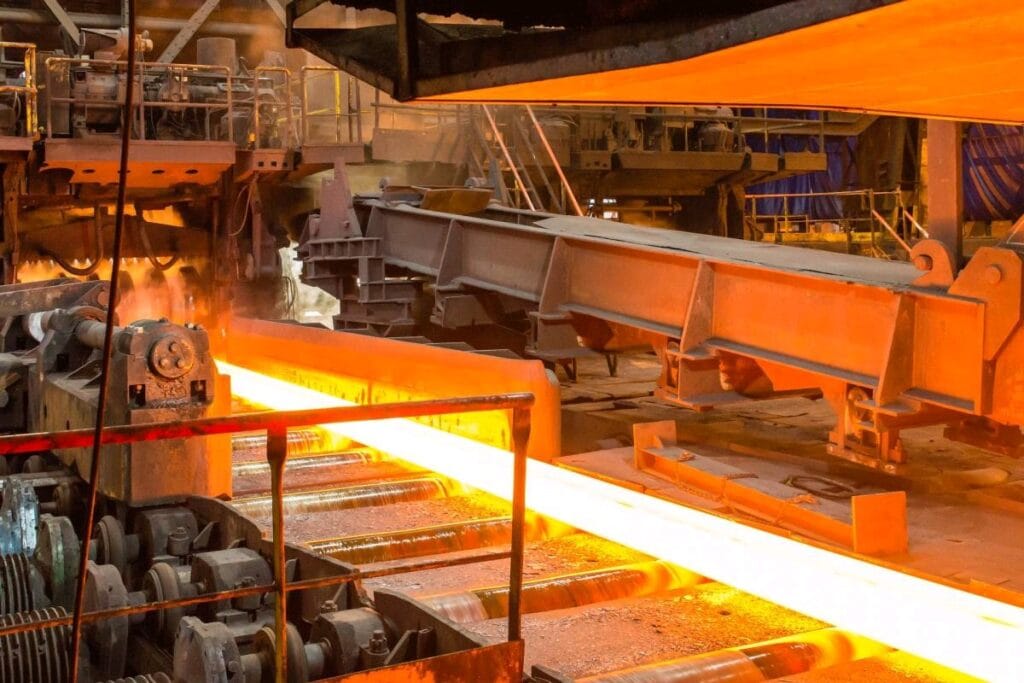
Step 3: Hot Rolling
Hot rolling reduces the thickness of the homogenized slab while the aluminum remains at an elevated processing temperature. The operation breaks down the cast structure, develops a more workable grain arrangement, and produces a strip or plate suitable for cold reduction. Rolling force, temperature, speed, lubrication, and pass schedule are controlled together.
The hot-rolling sequence normally includes:
- Reheating the homogenized feedstock within the validated process range.
- Removing or managing surface scale and edge irregularities where applicable.
- Passing the material through roughing and finishing stands.
- Measuring thickness, temperature, crown, and flatness during reduction.
- Cooling and coiling the hot-rolled strip under controlled conditions.
The hot mill sets the starting condition for cold rolling. A poor crown or edge profile can create extra trimming, while unstable temperature can affect gauge consistency and surface quality. The finished hot-rolled strip therefore receives its own inspection before it moves to the cold mill.
| Hot-rolling control | Why it matters | Typical record |
|---|---|---|
| Entry temperature | Supports stable deformation | Furnace or line log |
| Pass schedule | Controls reduction and load | Mill recipe |
| Strip crown and flatness | Affects later gauge and shape | Online gauge data |
| Surface condition | Limits defects carried into cold rolling | Visual or optical inspection |
| Coil identification | Preserves material history | Heat and coil number |
Step 4: Cold Rolling and Gauge Control
Cold rolling takes the hot-rolled strip through one or more passes at or near room temperature. This stage provides the final or near-final thickness, improves surface finish, and introduces the strain hardening associated with the H temper. Automatic gauge control, roll bending, tension, and coolant management work together to keep the strip within the agreed tolerance.
Cold rolling decisions depend on the target thickness and temper. A thin sheet may need several passes, while a thicker product may use a shorter route. Intermediate annealing may be included in some schedules to restore ductility before further reduction. The producer should validate the reduction path rather than apply one fixed percentage to every thickness.
Important controls include:
- Entry and exit thickness.
- Reduction per pass.
- Strip tension and speed.
- Roll surface condition.
- Edge shape, flatness, and coil telescoping.
- Cleanliness and residual rolling oil.
Cold rolling also creates internal stress and directional differences in properties. These effects are managed through the pass schedule and the subsequent stabilization step. The final certificate should report the measured properties for the delivered product, not only the nominal rolling recipe.
Step 5: Stabilization and Temper Control
The H32 temper combines strain hardening with stabilization. After the required cold work, the strip receives a controlled low-temperature thermal treatment that moderates residual stress and helps stabilize the delivered condition. H32 is therefore a process and property designation, not simply a statement that the material passed through a furnace.
The stabilization cycle must be matched to:
- Alloy chemistry and prior cold reduction.
- Product thickness and coil size.
- Furnace atmosphere, heating uniformity, and line speed.
- Required strength, elongation, and forming behavior.
- The applicable specification and customer test method.
The commonly repeated idea that every H32 product uses one universal temperature, holding time, or reduction percentage is misleading. Those values can vary by mill, thickness, equipment, and specification. A purchaser should request the actual certificate values and test method instead of accepting a generic range as a guarantee.
The final temper check can include tensile strength, yield strength, elongation, hardness, bend performance, or other agreed tests. For forming applications, the balance between strength and elongation is often more useful than the highest possible strength value.
Step 6: Finishing, Inspection, and Traceability
Finishing turns the stabilized coil into a product that can be converted by the customer. The line may include trimming, leveling, cleaning, slitting, surface protection, or other operations defined in the order. Inspection should cover both measurable properties and visible conditions, because a sheet can meet a strength requirement and still fail a surface or flatness requirement.
| Inspection item | Example of what is checked | Buyer-facing record |
|---|---|---|
| Chemistry | Alloy composition and heat identity | Mill test certificate |
| Mechanical properties | Tensile, yield, and elongation | Test report |
| Dimensions | Thickness, width, and length or coil width | Dimensional report |
| Shape | Flatness, edge wave, and camber | Inspection record |
| Surface | Scratches, dents, roll marks, stains, and pits | Surface inspection result |
| Internal quality | Pinholes or other special requirements | Agreed test report |
Traceability links the finished coil to the melt, cast section, rolling route, heat treatment, inspection results, and packaging record. If a customer needs traceability for automotive, marine, appliance, or other regulated applications, that requirement should be written into the purchase order before production begins.
Step 7: Slitting, Packaging, and Shipment
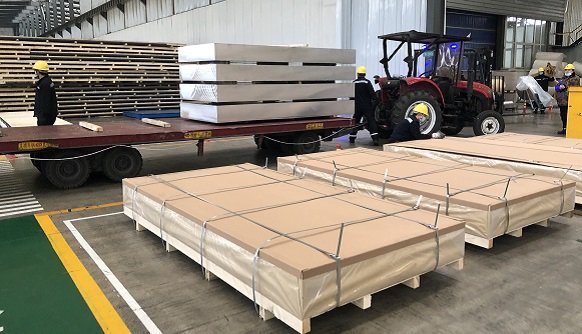
Slitting and packaging protect the properties established during rolling and finishing. Slitting knives must be aligned to the ordered width, and the cut edge should be checked for burrs, tearing, and excessive edge damage. Packaging must also account for moisture, handling, storage duration, transport mode, and the customer’s unloading equipment.
A practical packaging specification can define:
- Coil or sheet orientation.
- Inner and outer diameter limits.
- Core size and maximum package weight.
- Moisture-resistant wrapping.
- Edge guards and corner protection.
- Pallet or skid requirements.
- Marks, labels, and coil identification.
Aluminum sheet should be stored in a dry environment with protection against condensation. A packaging note is not a substitute for a storage procedure, especially when the material will travel through changing temperatures or remain in a warehouse for an extended period.
How Should Buyers Specify 5052-H32 Sheet?
The most reliable quotation request states the material and acceptance criteria in one place. ASTM B209 covers aluminum and aluminum-alloy sheet and plate in the listed alloys and tempers, but buyers should still define the exact product form, dimensions, surface condition, testing, and documentation required for their application.
Use this checklist:
- Alloy: 5052 or the required equivalent designation.
- Temper: H32.
- Product form: sheet, coil, cut-to-length sheet, or slit coil.
- Thickness and width: include nominal dimensions and tolerance.
- Surface: mill finish, brushed, anodized-ready, coated, or another condition.
- Shape: flatness, camber, edge wave, and cut-edge requirements.
- Mechanical properties: minimum or range, with test direction and method.
- Inspection: chemistry, dimensions, surface, flatness, and special tests.
- Documentation: certificate, packing list, origin documents, and traceability.
- Packaging: coil orientation, protection, labels, and maximum package weight.
For a forming application, the best material is not necessarily the hardest material. Confirm the bend radius, tooling, grain direction, joining method, and corrosion environment before selecting the final specification.
FAQ
Is 5052-H32 aluminum sheet heat-treatable?
No. 5052 is generally treated as a non-heat-treatable wrought alloy. Its H32 condition is produced through cold work followed by stabilization, not through solution heat treatment and artificial aging. The delivered properties must still be confirmed against the applicable product standard and the supplier’s test certificate.
What is the difference between 5052-H32 and 5052-O?
5052-O is annealed and normally offers greater ductility with lower strength. 5052-H32 has been strain hardened and stabilized, so it generally offers higher strength with less forming margin than the O condition. The appropriate choice depends on the required bend, strength, flatness, and service conditions.
Does every 5052-H32 sheet use the same cold-reduction percentage?
No. Reduction depends on starting gauge, final gauge, intermediate annealing, mill capability, and the required property range. The temper designation describes the delivered condition; it does not prescribe one universal rolling schedule for every supplier or thickness.
Which tests should be requested for 5052-H32 sheet?
At minimum, request chemistry verification, thickness and width measurement, surface inspection, flatness or shape inspection, and mechanical testing appropriate to the agreed standard. Add hardness, bend testing, pinhole inspection, coating checks, or other tests when the end use requires them.
What information should appear on the material certificate?
The certificate should identify the alloy, temper, heat or batch number, product dimensions, applicable standard, test results, and inspection status. For traceability-sensitive orders, it should connect the finished coil to the production and testing records used to release it.
Can zggmetal provide a customized 5052-H32 specification?
Use the 5052 aluminum sheet Specifications to submit the required alloy, temper, dimensions, surface, mechanical properties, packaging, and documentation. The final specification should be confirmed in writing before production.