
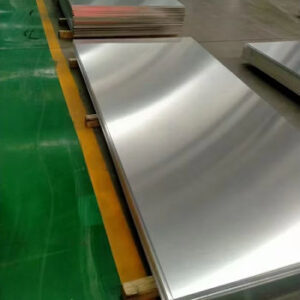
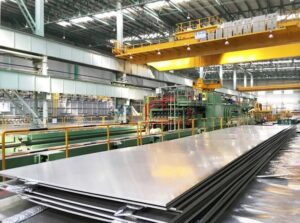
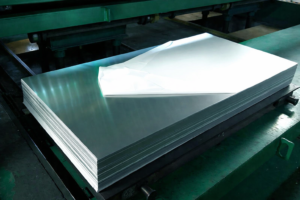
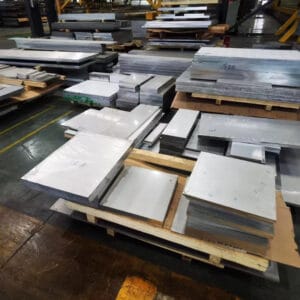
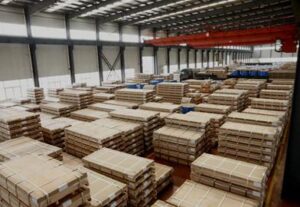
5052-H32 aluminum sheet is produced through a controlled sequence of melting, casting, rolling, stabilization, inspection, and finishing. Each stage affects thickness consistency, surface condition, strength, formability, and corrosion resistance. zggmetal reviews the alloy, temper, dimensions, tolerances, and applicable standard before production so the finished material is matched to the intended application.
- 5052 is a non-heat-treatable aluminum-magnesium alloy whose strength is developed mainly through cold work and stabilization.
- H32 indicates a strain-hardened and stabilized temper, commonly selected when a balance of strength, corrosion resistance, and forming performance is needed.
- Final mechanical properties, tolerances, surface requirements, and inspection criteria should be confirmed against the purchase specification and Mill Test Certificate.
How zggmetal Produces 5052-H32 Aluminum Sheet
The typical route for 5052-H32 begins with an aluminum-magnesium melt and ends with finished sheet or coil prepared to the buyer’s dimensions. The exact process settings depend on thickness, width, surface requirement, temper, and the governing standard. A consistent route matters because a small variation in composition, rolling reduction, or stabilization can affect the material’s final forming behavior.
| Production Stage | Primary Purpose | Typical Control Focus |
|---|---|---|
| Melting and alloying | Create the required 5052 aluminum-magnesium composition. | Chemical analysis, melt cleanliness, temperature control. |
| DC casting and homogenization | Produce a rolling ingot with a more uniform structure. | Ingot quality, temperature profile, segregation control. |
| Hot rolling | Convert the ingot into intermediate-gauge plate or coil. | Rolling temperature, gauge reduction, flatness. |
| Cold rolling and stabilization | Reach the target thickness and H32 temper condition. | Gauge control, reduction schedule, temper consistency. |
| Finishing and inspection | Prepare material for fabrication and shipment. | Surface, dimensions, mechanical properties, traceability. |
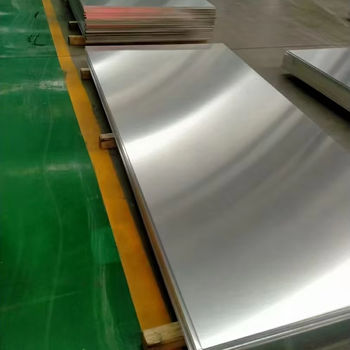
Step 1: Raw Material Selection and Melting
5052 belongs to the 5000 aluminum alloy family, where magnesium is the principal alloying element. This composition gives the alloy good corrosion resistance and weldability while keeping it non-heat-treatable. The material’s strength is therefore developed primarily through controlled cold working instead of precipitation hardening.
Production starts by charging aluminum and alloying materials into a furnace. The melt is adjusted to the required chemistry, treated to reduce unwanted inclusions and dissolved hydrogen, and sampled for analysis before casting. Clean melt practice is important because internal defects formed at this stage can remain visible after rolling.
- Verify the chemical composition against the ordered alloy specification.
- Control melt temperature before casting.
- Use filtration and degassing practices appropriate to the product requirement.
- Record the heat identity for downstream traceability.
Step 2: DC Casting and Homogenization
After the melt is approved, it is commonly cast into rolling ingots by a direct-chill casting process. In this method, molten metal enters a water-cooled mold while the solidifying ingot is withdrawn. The process creates a large ingot suitable for later hot-rolling operations.
The cast ingot is then homogenized under a controlled thermal cycle. Homogenization helps reduce chemical segregation and makes the structure more uniform before rolling. The actual time and temperature are selected for the alloy and ingot dimensions, so they should be treated as process parameters rather than universal values.
Step 3: Hot Rolling from Ingot to Intermediate Gauge
Hot rolling reduces the homogenized ingot from slab thickness to an intermediate plate or coil gauge. The material is reheated to a suitable rolling temperature and passed through rolling stands in a planned reduction schedule. This stage establishes the starting thickness and structure for the subsequent cold-rolling process.
Temperature, reduction, and cooling must be managed together. If the temperature falls outside the intended processing range, rolling loads, grain structure, flatness, and surface quality can be affected. For this reason, zggmetal treats rolling-route selection as part of the product specification review, especially for wide sheet and tight-tolerance orders.
Step 4: Cold Rolling for Precision Thickness Control
Cold rolling brings the hot-rolled material to its final or near-final thickness while improving gauge control and surface quality. The material passes through cold mills at or near room temperature, with the reduction schedule selected according to the requested thickness, temper, and formability requirements.
Cold work increases dislocation density in the aluminum, which raises strength and hardness while reducing some ductility. This is the foundation of the H temper system. Depending on the product route, intermediate annealing may be used before the final reduction to maintain a workable balance between strength and formability.
Step 5: Stabilization to Achieve H32 Temper
H32 is a strain-hardened and stabilized temper. In practical terms, the sheet receives controlled cold work and then a stabilization treatment that helps settle its mechanical properties. It is commonly described as a quarter-hard stabilized condition, although the applicable standard and thickness range control the final property requirements.
| Temper Symbol | Meaning | Selection Consideration |
|---|---|---|
| O | Annealed, soft condition. | Use when maximum formability is the main priority. |
| H32 | Strain-hardened and stabilized. | Balances strength, corrosion resistance, and practical forming performance. |
| H34 | Higher strain-hardened and stabilized condition. | Use when higher strength is required and the forming demand is lower. |
Mechanical-property values vary with thickness, test direction, product form, and standard. Rather than relying on a generic online range, the purchase order should identify the required standard and any specific tensile, yield, elongation, hardness, or bend-test requirements. zggmetal can use those requirements to align production and inspection with the application.
Step 6: Finishing and Quality Control
After rolling and stabilization, the material is finished and inspected before release. Finishing may include trimming, leveling, cleaning, tension leveling, or other operations specified for the final sheet or coil. The purpose is to deliver material with the required dimensions, edge condition, flatness, and surface condition.
- Chemical verification: confirm alloy composition for the production heat.
- Mechanical testing: test tensile properties and elongation where required by the order standard.
- Dimensional inspection: measure thickness, width, length, and applicable flatness criteria.
- Surface inspection: check for scratches, stains, roll marks, edge defects, and other appearance concerns.
- Traceability: link the finished material to its heat, coil, inspection records, and Mill Test Certificate.
Step 7: Slitting, Cutting, and Export Packaging
The approved coil may be supplied as coil, slit coil, cut-to-length sheet, or a customer-specific format. Slitting is used to produce narrower widths, while cut-to-length processing prepares sheets for fabrication lines, distributors, or project delivery. Edge quality and burr limits should be stated when the material will be stamped, welded, or directly handled in production.
Packaging is selected to protect the surface and edges during storage and transport. A complete packing requirement can include interleaving, moisture protection, edge guards, pallet type, coil eye orientation, weight limits, and marking requirements. These details are especially valuable for export shipments and surface-sensitive products.
What to Specify When Ordering 5052-H32 Sheet
A clear RFQ reduces technical uncertainty and helps zggmetal quote the correct processing route. Include the end use whenever possible, because a general-purpose sheet, a formed enclosure panel, and a corrosion-resistant transport component can require different tolerances and surface controls even when all are ordered as 5052-H32.
- Alloy and temper: 5052-H32.
- Product form: coil, slit coil, sheet, or cut-to-length plate.
- Thickness, width, length, and required tolerance.
- Applicable standard, such as ASTM, EN, ISO, GB/T, or a buyer specification.
- Surface requirement, protective film, and acceptable visual condition.
- Flatness, edge condition, bend requirement, or forming requirement.
- Quantity, packaging method, destination, and required documentation.
FAQ: 5052-H32 Production Process
What is the difference between 5052-H32 and 5052-O?
5052-O is annealed and provides the highest forming margin. 5052-H32 has been strain-hardened and stabilized, so it provides higher strength and hardness with lower ductility than O temper. The right choice depends on the part geometry, bend radius, forming method, and final strength requirement.
How is 5052-H32 temper achieved?
H32 is achieved through controlled cold work followed by stabilization. The exact reduction schedule and thermal treatment are set according to the applicable product standard, thickness, and required mechanical properties. Final temper compliance is confirmed through the specified inspection and test program.
Can zggmetal supply 5052-H32 in custom sizes?
zggmetal can review custom thickness, width, length, coil weight, slit width, surface, and packaging requirements. Send the requested specification, standard, quantity, destination, and any critical tolerance or forming requirement so the production route and quotation can be matched to the order.
What documents should accompany 5052-H32 aluminum sheet?
For specification-controlled orders, buyers commonly request a Mill Test Certificate that identifies the material and reports the relevant chemical, mechanical, and dimensional inspection results. Additional documentation should be agreed before production when a project requires third-party inspection, special labeling, or specific compliance records.
Request 5052-H32 Aluminum Sheet from zggmetal
zggmetal supports 5052-H32 aluminum sheet and coil inquiries for fabrication, transportation, marine-adjacent, enclosure, and general industrial applications. Provide the material specification and end-use requirements to receive a technically aligned quotation and confirm the appropriate production, inspection, and packing requirements.