
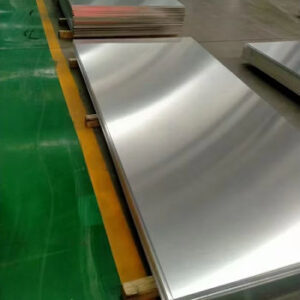
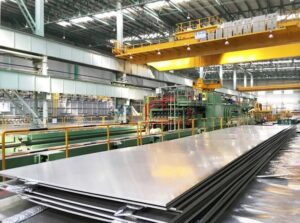
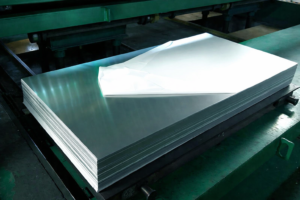
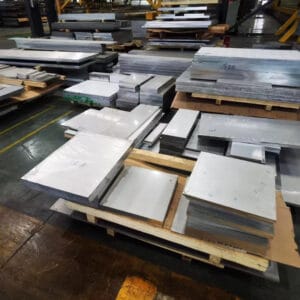
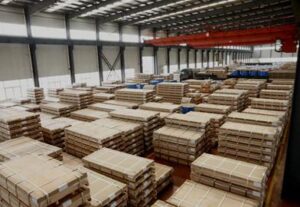
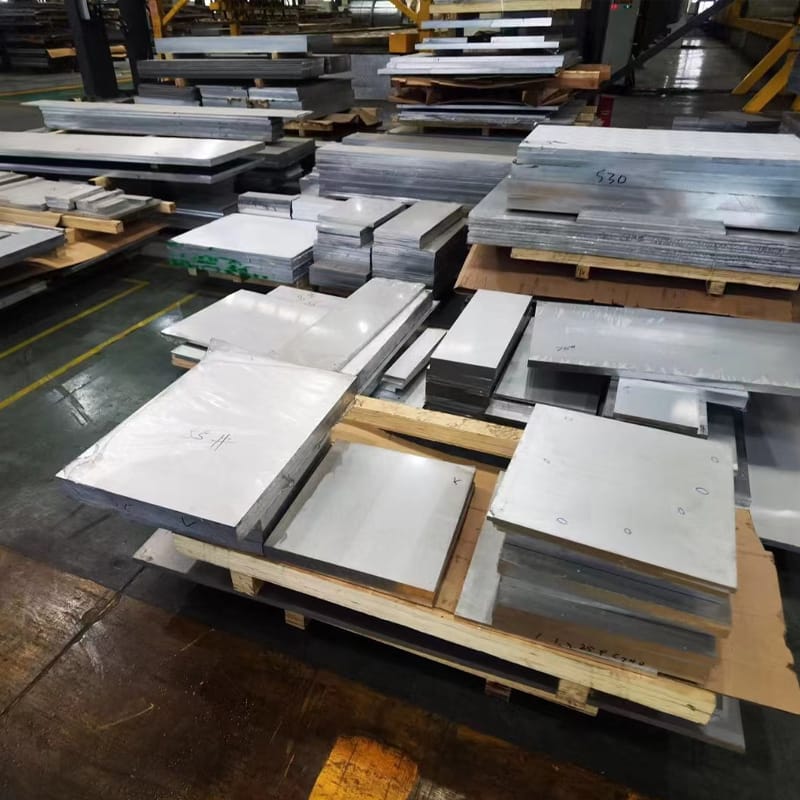
What Is 1100 Aluminum Sheet?
1100 aluminum sheet is a commercially pure aluminum product in the 1xxx series. It contains a minimum of 99.00% aluminum and is selected when formability, corrosion resistance, thermal conductivity, electrical conductivity, and surface quality are more important than high structural strength.
Unlike heat-treatable alloys such as 6061, 1100 aluminum is strengthened mainly through cold working. This is why 1100 sheet is commonly supplied in O, H12, H14, H16, H18, H24, and other H tempers. The alloy remains easy to fabricate while offering different strength levels for forming, fabrication, and general industrial use.
1100 aluminum sheet is also identified by several equivalent designations, including AA1100 and UNS A91100. For international procurement, buyers should confirm the alloy, temper, dimensions, tolerances, surface finish, and applicable standard on the quotation and mill test certificate.
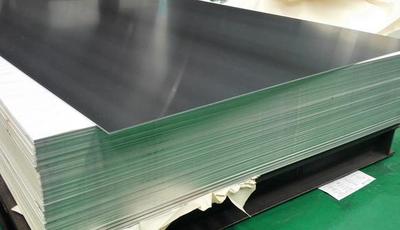
Key Properties of 1100 Aluminum Sheet
The appeal of 1100 aluminum sheet comes from its balanced processing performance. It is not the strongest aluminum alloy, but it performs very well in applications that require clean forming, reliable corrosion resistance, and good heat or electrical transfer.
1. Excellent Formability
1100 aluminum is soft, ductile, and easy to bend, roll, spin, stamp, draw, and fabricate. In the annealed O temper, it is suitable for demanding forming operations and deep-drawn components. H tempers provide more strength and handling stability, but they also reduce ductility compared with O temper.
2. Good Corrosion Resistance
The high aluminum content allows the material to form a thin protective oxide film when exposed to air. This gives 1100 sheet good resistance to atmospheric corrosion and makes it suitable for many indoor, outdoor, chemical, food-processing, and general fabrication environments. The exact suitability still depends on the chemical medium, temperature, exposure time, and joint design.
3. High Thermal Conductivity
1100 aluminum transfers heat efficiently, which is why it is often considered for heat exchangers, cooking equipment, HVAC components, reflectors, and other heat-transfer applications. When thermal performance is a priority, 1100 may be preferred over stronger but less conductive alloy families.
4. Good Electrical Conductivity
As a 1xxx-series alloy, 1100 aluminum offers good electrical conductivity. It can be used for selected electrical components, conductive parts, and general applications where high conductivity is needed without the cost or weight of copper.
5. Good Weldability
1100 aluminum sheet is generally easy to weld and join using suitable aluminum welding procedures. Welding performance depends on the temper, thickness, joint design, cleaning, shielding gas, filler metal, and the requirements of the finished part. Always qualify the welding procedure for safety-critical or pressure-containing applications.
6. Attractive Surface Finish
1100 aluminum provides a clean, bright surface that can be used in mill-finish, polished, brushed, anodized, painted, or other decorative applications. Its surface quality makes it useful for reflectors, nameplates, decorative panels, appliance components, and products where appearance matters.
1100 Aluminum Sheet Chemical Composition
The exact chemical limits should be confirmed against the purchasing standard. A typical AA1100 composition includes:
| Aluminum | 99.00% minimum |
| Silicon plus iron | Commonly limited to approximately 0.95% maximum |
| Copper | Controlled in a small amount, commonly up to 0.20% |
| Manganese | Small residual amount |
| Zinc | Commonly up to 0.10% |
| Other elements | Controlled individually and in total |
The chemistry is important because 1100 is defined as a commercially pure aluminum alloy. A supplier should be able to provide a mill test certificate showing the batch chemistry and confirming the ordered alloy.
1100 Aluminum Sheet Tempers: O, H14, and H24
Temper is a critical part of a 1100 aluminum sheet specification. It describes the material condition after annealing, cold working, or related processing.
| Temper | General condition | Typical selection logic |
|---|---|---|
| O | Annealed and soft | Maximum ductility, deep drawing, spinning, and complex forming |
| H12 | Quarter hard | More stability than O temper with good remaining formability |
| H14 | Half hard | Balanced strength and formability for general fabrication |
| H16 | Three-quarter hard | Higher strength with less ductility |
| H18 | Full hard | Higher hardness and rigidity where forming is limited |
| H24 | Strain hardened and partially annealed | Useful when a balance of strength and formability is required |
The right temper depends on the manufacturing process. For example, an O-temper sheet may be the better choice for deep drawing, while H14 or H24 may be more appropriate for flat panels, covers, signage, or formed components that need better resistance to handling and deformation.
Do not select a temper based only on the name. Ask the supplier for the mechanical-property range required by your standard, including tensile strength, yield strength, and elongation.
Common Applications of 1100 Aluminum Sheet
1100 aluminum sheet is used across industries because it is easy to process and offers reliable resistance to weathering and many common service environments.
Chemical and Process Equipment
1100 sheet can be used for selected tanks, linings, covers, ducts, and chemical-processing components where its corrosion resistance and formability match the service conditions. Chemical compatibility must be reviewed before production.
Heat Exchangers and HVAC Components
Its thermal conductivity, light weight, and formability make 1100 aluminum suitable for heat-transfer parts, air-conditioning components, ventilation equipment, and related fabrication.
Food and Kitchen Equipment
1100 aluminum is commonly associated with food-handling equipment, cooking utensils, trays, containers, and other formed products. For food-contact applications, the finished product must meet the regulations and surface requirements that apply in the target market.
Reflectors and Lighting Components
The alloy’s bright surface and good finishing response make it suitable for reflectors, lampshades, lighting components, and decorative parts.
Electrical and Conductive Components
1100 sheet may be selected for conductive or electrical components when its conductivity, formability, and corrosion resistance meet the design requirements.
Signage, Nameplates, and Decorative Panels
The smooth surface accepts printing, painting, polishing, brushing, and anodizing. This makes 1100 sheet useful for signs, labels, equipment panels, wall panels, and architectural details.
General Sheet Metal Fabrication
Fabricators use 1100 sheet for covers, guards, enclosures, partitions, trim, and formed components that do not require the strength of 3xxx, 5xxx, or 6xxx alloys.
1100 Aluminum Sheet vs. 3003 Aluminum Sheet
1100 and 3003 aluminum sheet are often compared because both are easy to form, non-heat-treatable, weldable, and corrosion resistant. The main difference is that 3003 contains manganese, which generally gives it higher strength than 1100.
| Factor | 1100 aluminum sheet | 3003 aluminum sheet |
|---|---|---|
| Alloy family | 1xxx commercially pure aluminum | 3xxx aluminum-manganese alloy |
| Main advantage | Purity, conductivity, formability, and surface quality | Higher strength with good formability |
| Formability | Excellent | Very good |
| Thermal and electrical conductivity | Generally higher | Generally lower than 1100 |
| Strength | Lower | Higher |
| Typical uses | Heat transfer, food equipment, reflectors, general forming | Roofing, HVAC, tanks, cookware, and general fabrication |
Choose 1100 when conductivity, purity, easy forming, or a bright finish is the priority. Consider 3003 when the part needs more strength or rigidity while retaining good fabrication performance. For load-bearing, marine, pressure, or high-strength applications, a 5xxx or 6xxx alloy may be more appropriate.
Available Specifications and Processing Options
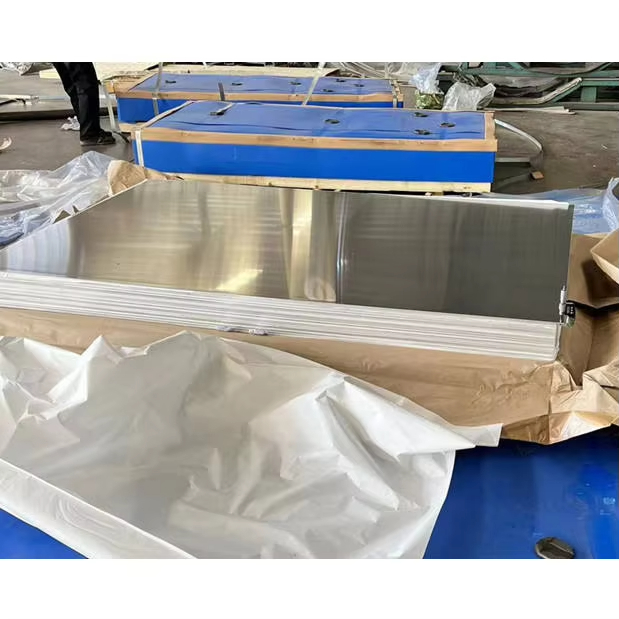
Zggdmetal’s aluminum sheet catalog lists 1100 sheet in H12-H14 tempers, thicknesses from 0.2 mm to 260 mm, and mill-finish surfaces. The company also describes custom cutting, packaging, and online support for aluminum sheet procurement.
Depending on the project, buyers may request:
- Alloy and temper: 1100-O, 1100-H12, 1100-H14, 1100-H24, or another approved condition
- Thickness, width, and length
- Mill finish, brushed, polished, anodized, painted, or protective-film options
- Cut-to-length, slitting, bending, stamping, or other secondary processing
- Flatness, dimensional tolerances, edge condition, and surface-quality requirements
- Export packaging and moisture protection
- Mill test certificate, inspection report, and third-party inspection when required
For international projects, confirm whether the material should comply with ASTM B209/B209M, EN 485, EN 573, GB/T 3880, JIS, or another specified standard. ASTM B209/B209M covers aluminum and aluminum-alloy flat sheet, coiled sheet, and plate in listed alloys and tempers.
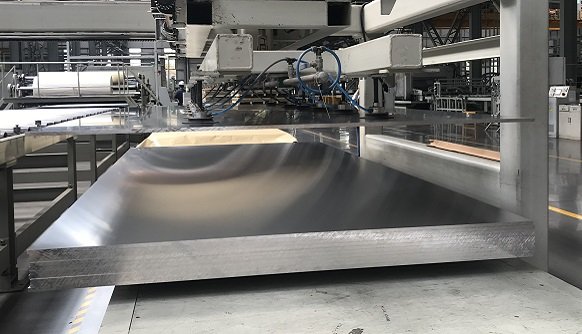
How to Choose the Right 1100 Aluminum Sheet
Before requesting a quotation, prepare the following information:
- Application: Explain whether the sheet will be formed, welded, used for heat transfer, exposed outdoors, or used in a food or chemical environment.
- Temper: Select O for maximum formability, H14 for a general balance, or another temper based on the required mechanical properties.
- Dimensions: Provide thickness, width, length, quantity, and acceptable tolerances.
- Surface finish: State whether mill finish is sufficient or whether you need polished, brushed, anodized, coated, or film-protected material.
- Standard and documentation: Specify ASTM, EN, GB/T, JIS, or project-specific requirements, plus the need for MTCs or inspection.
- Logistics: Include destination port, packaging requirements, delivery schedule, and trade terms.
The supplier should confirm material availability, production lead time, minimum order quantity, packing method, and the actual mechanical-property values for the ordered thickness and temper.
Why Buy 1100 Aluminum Sheet from Zggdmetal?
Zggdmetal is a China-based aluminum materials manufacturer and supplier offering aluminum sheets, plates, coils, strips, tubes, profiles, foils, and related products. Its published product information emphasizes international standards, custom processing, quality checks before shipment, and support for global buyers.
For a 1100 aluminum sheet quotation, send the required alloy, temper, dimensions, surface finish, quantity, application, destination, and standard. This gives the technical team enough information to recommend a practical specification and prepare a more accurate quotation.
FAQ About 1100 Aluminum Sheet
Is 1100 aluminum sheet pure aluminum?
1100 is commercially pure aluminum, with a minimum aluminum content of 99.00%. It is not laboratory-pure aluminum, because small controlled amounts of copper, silicon, iron, and other elements are permitted by the applicable standard.
Is 1100 aluminum sheet heat treatable?
No. 1100 is a non-heat-treatable alloy. Its strength is increased mainly through cold working, which is reflected in H temper designations such as H14 and H18.
What is 1100-H14 aluminum sheet used for?
1100-H14 is commonly selected for general fabrication, formed panels, covers, signage, reflectors, HVAC components, and other parts that need a balance of moderate strength and good formability.
Is 1100 aluminum sheet easy to weld?
Yes, 1100 is generally considered highly weldable when suitable procedures are used. The welding method, filler, joint design, cleaning, and service requirements should still be reviewed by the fabricator.
Is 1100 aluminum stronger than 3003?
Generally, no. 3003 usually provides higher strength because of its manganese addition, while 1100 is typically preferred for higher purity, conductivity, and easier forming.
Can 1100 aluminum sheet be customized?
Yes. Depending on the order and production route, buyers can request custom thicknesses, widths, lengths, cutting, packaging, and surface-treatment options. Confirm the available range with the supplier before ordering.
Conclusion
1100 aluminum sheet is a practical choice for applications that value formability, corrosion resistance, conductivity, weldability, and a clean surface over maximum strength. It is widely used in heat-transfer equipment, food and kitchen products, chemical equipment, reflectors, signage, electrical components, and general fabrication.
The most important purchasing decisions are alloy, temper, thickness, finish, standard, tolerances, documentation, and delivery requirements. If you need a reliable 1100 aluminum sheet supplier, contact Zggdmetal with your project specifications for a material recommendation and quotation.