

Table of Contents
• What Is a 4x8 Aluminum Sheet?
• Common Thickness Options for 4x8 Aluminum Sheet
• How to Choose the Right Thickness
• How Much Does a 4x8 Aluminum Sheet Weigh?
• Popular Aluminum Grades for 4x8 Sheets
• How to Choose the Right Alloy
• What Affects Aluminum Sheet 4x8 Price?
• Common Buying Mistakes to Avoid
• FAQ About 4x8 Aluminum Sheet
Key Takeaways
- A 4×8 aluminum sheet equals 48 x 96 inches, or about 1220 x 2440 mm.
- Most general sheet metal projects use 1 mm to 3 mm thickness; stronger panels often use 3 mm to 6 mm or aluminum plate.
- 3003 aluminum sheet is a cost-effective choice for general fabrication, 5052 aluminum sheet is better for corrosion resistance, and 6061 aluminum sheet is preferred for strength and machining.
- Final price depends on alloy, thickness, temper, finish, quantity, cutting service, tolerance, packaging, and aluminum market changes.
- For export or OEM orders, confirm MTC, tolerance, PVC film, packing method, and container loading plan before purchase.
You may need to pay attention to the following before making a purchase:
| If you only need a fast recommendation: choose 3003-H14 for general panels, 5052-H32 for marine or humid environments, and 6061-T6 for stronger machined parts. For visible surfaces, confirm finish quality and protective film before production. |
What Is a 4×8 Aluminum Sheet?
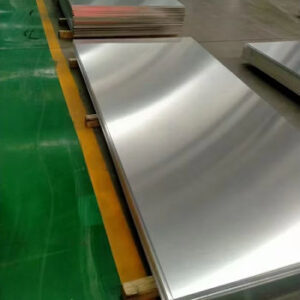
A 4×8 aluminum sheet is a flat aluminum sheet with a width of 4 feet and a length of 8 feet. It is one of the most common sheet sizes because it matches standard cutting machines, storage racks, trucks, CNC equipment, and fabrication workflows.
This size offers enough surface area for large panels while remaining practical for handling, cutting, packing, and shipping. In international orders, buyers may also describe the same product as48 x 96 aluminum sheet or 1220 x 2440 aluminum sheet.
| Size Format | Measurement |
| Feet | 4 ft x 8 ft |
| Inches | 48 in x 96 in |
| Millimeters | About 1220 mm x 2440 mm |
Common Thickness Options for 4×8 Aluminum Sheet
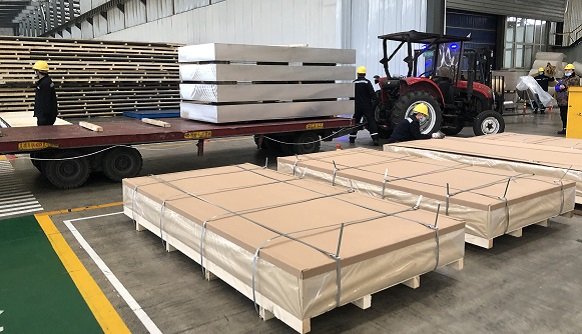
Thickness is one of the most important specifications when buying aluminum sheet. It affects strength, weight, bendability, processing cost, shipping cost, and final application performance.
| Thickness | Approx. mm | Common Use |
| 0.020 in | 0.5 mm | Light decorative panels, signs, covers |
| 0.032 in | 0.8 mm | Interior panels, light enclosures |
| 0.040 in | 1.0 mm | Trim, signs, light fabrication |
| 0.063 in | 1.6 mm | General sheet metal work |
| 0.080 in | 2.0 mm | Cabinets, machine covers, vehicle panels |
| 0.100 in | 2.5 mm | Stronger covers and formed parts |
| 0.125 in | 3.0 mm | 1/8 aluminum sheet, brackets, panels |
| 0.190 in | 4.8 mm | Heavy-duty panels, flooring, transport parts |
| 0.250 in | 6.35 mm | Thick sheet or light plate applications |
How to Choose the Right Thickness
For most general applications, 1 mm to 3 mm aluminum sheet is commonly used. For stronger structural parts, buyers often choose 3 mm to 6 mm or move to aluminum plate. The best thickness should be selected according to load, span, bending requirements, fixing method, and surface expectations.
| Application | Recommended Thickness | Factory Buying Tip |
| Advertising signs and light panels | 0.8-1.5 mm | Confirm flatness and surface protection if the panel is visible. |
| Machine covers and cabinets | 1.5-3.0 mm | 2 mm and 3 mm are common choices for strength and easy fabrication. |
| Vehicle and trailer panels | 2.0-4.0 mm | 5052 is often selected when corrosion resistance and fatigue strength matter. |
| Marine panels and fuel tanks | 2.0-6.0 mm | Use 5052 or 5083 and confirm welding, saltwater exposure, and inspection needs. |
| Machined or structural parts | 3.0-6.35 mm+ | 6061-T6 is common, but bending radius and machining allowance should be checked. |
How Much Does a 4×8 Aluminum Sheet Weigh?
Weight depends mainly on thickness and alloy density. Aluminum is much lighter than steel, which is one reason it is widely used in transportation, construction panels, marine parts, equipment covers, and machinery housings.
Practical formula: length (m) x width (m) x thickness (mm) x 2.71 = approximate weight in kg. For a 1220 x 2440 mm sheet, 1 mm thickness is about 8 kg per sheet.
| Thickness | Approx. Weight per 4×8 Sheet |
| 0.040 in / 1.0 mm | About 8 kg |
| 0.063 in / 1.6 mm | About 13 kg |
| 0.080 in / 2.0 mm | About 16 kg |
| 0.125 in / 3.0 mm | About 24 kg |
| 0.190 in / 4.8 mm | About 39 kg |
| 0.250 in / 6.35 mm | About 51 kg |
Actual weight may vary slightly depending on alloy, thickness tolerance, and exact sheet size.
Popular Aluminum Grades for 4×8 Sheets
Different aluminum grades have different strength, corrosion resistance, formability, weldability, machinability, and surface performance. Choosing the right grade is more important than simply choosing the cheapest sheet.
| Alloy | Main Features | Typical Applications |
| 1050 / 1060 | High purity, excellent formability and corrosion resistance | Signs, reflectors, electrical parts |
| 1100 | Soft, easy to form, good corrosion resistance | Food equipment, panels, decorative use |
| 3003 aluminum sheet | Good corrosion resistance, stronger than 1000 series | Roofing, cabinets, tanks, general sheet metal |
| 5052 aluminum sheet | Excellent corrosion resistance and fatigue strength | Marine parts, vehicle panels, fuel tanks |
| 5083 | High strength and marine corrosion resistance | Shipbuilding, pressure vessels |
| 6061 aluminum sheet | Good strength, weldability, machinability | Structural parts, machinery, fixtures |
| 6063 | Good surface finish and corrosion resistance | Architectural panels, decorative applications |
| 7075 | Very high strength | Aerospace and high-stress components |
How to Choose the Right Alloy
If your project needs easy bending and general corrosion resistance, 3003 is often suitable. If corrosion resistance is critical, especially in marine or humid environments, 5052 is usually a better choice. If strength and machining performance matter more, 6061 may be preferred.
| Buyer Need | Recommended Alloy | Reason |
| Lowest practical cost for general sheet metal | 3003 | Good formability and corrosion resistance at a competitive cost. |
| Marine, outdoor, or humid environments | 5052 / 5083 | Better corrosion resistance and fatigue performance. |
| Machining, fixtures, or higher strength | 6061 | Good strength, machinability, and weldability. |
| Decorative or architectural surface | 5052 / 6063 | Good surface quality and corrosion resistance. |
| High-stress lightweight parts | 7075 | Very high strength, but higher cost and lower formability. |
3003 vs 5052 vs 6061 for 4×8 Aluminum Sheet
| Alloy | Strength | Corrosion Resistance | Formability | Best For |
| 3003 | Medium-low | Good | Excellent | General sheet metal, roofing, cabinets |
| 5052 | Medium | Excellent | Good | Marine, vehicle panels, tanks |
| 6061 | Medium-high | Good | Moderate | Structural parts, machinery, fixtures |
| zggdmetal supplier Recommendation For repeated OEM orders, send the drawing, application, bending radius, surface requirement, and quantity first. A supplier can then recommend alloy, temper, tolerance, protective film, and cutting method more accurately. |
How Temper Affects 4×8 Aluminum Sheet
Temper describes the heat treatment or work-hardening condition of aluminum. It affects hardness, strength, bending performance, machinability, and whether cracking may occur during forming.
| Temper | General Meaning | Common Use |
| O | Annealed, soft | Deep drawing, bending, forming |
| H14 | Strain hardened, half hard | General sheet metal work |
| H24 | Strain hardened and partially annealed | Panels, fabrication, moderate forming |
| H32 | Work hardened and stabilized | Marine and corrosion-resistant applications |
| T6 | Heat treated, higher strength | Structural and machined parts |
For bending or forming, softer tempers are usually easier to process. For structural or machined parts, harder tempers such as T6 may be selected.
Surface Finish Options
Surface finish affects appearance, corrosion resistance, processing, and final product quality. If the sheet will be used for visible panels or decorative parts, surface quality should be confirmed before purchase.
| Surface Finish | Description | Typical Use |
| Mill finish | Natural aluminum surface | General fabrication |
| Brushed finish | Directional surface texture | Decorative panels, appliances |
| Anodized finish | Oxide layer for protection and color | Architecture, electronics, decorative parts |
| Painted finish | Coated surface | Roofing, signage, wall panels |
| Embossed finish | Patterned surface | Flooring, anti-slip panels |
| Protective film | Temporary film protection | Cutting, bending, shipping protection |
What Affects Aluminum Sheet 4×8 Price?
When buyers search for aluminum sheet 4×8 price, they often expect one fixed number. In real quotations, price changes according to raw aluminum market prices, alloy selection, thickness, order quantity, processing requirements, and export packing.
| Price Factor | Why It Matters |
| Alloy grade | 5052, 6061, and 7075 usually cost more than 3003 or 1100. |
| Thickness | Thicker sheets use more aluminum and increase material weight. |
| Temper | Special tempers may require additional processing or limited stock. |
| Surface finish | Anodized, painted, brushed, or film-protected surfaces increase cost. |
| Quantity | Bulk orders usually receive better unit pricing and packing efficiency. |
| Cutting service | Custom cutting, CNC cutting, laser cutting, or drilling adds processing cost. |
| Packaging | Export wooden pallets, waterproof paper, and corner protection may add cost. |
| Tolerance requirement | Tighter thickness, flatness, or dimensional tolerance may increase production cost. |
How to Reduce Purchasing Cost Without Sacrificing Quality
- Confirm the real application before choosing an expensive alloy.
- Use standard 4×8 stock sizes when possible to reduce lead time and cutting waste.
- Order repeated sizes together so cutting, packing, and shipping can be planned efficiently.
- Specify tolerance only where it matters; unnecessary precision increases cost.
- Ask whether protective PVC film is needed before cutting or bending visible panels.
- Compare total landed cost, including packing, inland transport, sea freight, and handling, not only sheet price.
Standard Sheet or Custom Cut Sheet?
A standard 4×8 aluminum sheet is usually more cost-effective and easier to source. However, custom cut sheets can reduce waste, save fabrication time, and improve production efficiency for OEM or repeated parts.
| Option | Advantages | Best For |
| Standard 4×8 sheet | Fast supply, common stock, lower cost | General fabrication |
| Custom cut sheet | Less waste, ready for production | OEM parts, precision projects |
| Large-format sheet | Fewer joints, larger coverage | Panels and construction |
| Small cut pieces | Easy handling, less workshop cutting | Repairs and small projects |
Common Applications of 4×8 Aluminum Sheet
Because of its practical size and good material performance, 4×8 aluminum sheet is used across many industries. The right alloy and thickness should always match the working environment and load requirements.
| Industry | Applications |
| Construction | Wall panels, roofing, ceiling panels, curtain wall parts |
| Transportation | Trailer panels, vehicle bodies, flooring, covers |
| Marine | Boat panels, deck parts, fuel tanks |
| Machinery | Machine covers, guards, cabinets, brackets |
| Signage | Road signs, advertising boards, nameplates |
| Electronics | Enclosures, heat dissipation parts |
| Food equipment | Containers, work surfaces, processing equipment |
| Aerospace | Interior panels, structural components, precision parts |
Common Buying Mistakes to Avoid
- Only comparing price and ignoring alloy, temper, tolerance, and surface quality.
- Choosing 6061-T6 for bending parts without checking bend radius and cracking risk.
- Ignoring flatness requirements for large panels, CNC cutting, or visible surfaces.
- Forgetting protective film for brushed, anodized, painted, or decorative sheets.
- Ordering by thickness only without confirming actual width, length, and tolerance standard.
- Not asking for Mill Test Certificate (MTC) or material standard when the project requires traceability.
- Using ordinary packing for export orders that need wooden pallets, waterproof paper, and corner protection.
Quality Inspection and Certificates
For industrial and export orders, quality control is not only about appearance. Buyers should confirm chemical composition, mechanical properties, thickness tolerance, surface condition, flatness, packing, and documentation before shipment.
| Inspection Item | What to Check |
| Raw material inspection | Alloy, temper, coil/sheet source, and production batch. |
| Chemical composition | Conformity with ASTM B209, EN 485, GB/T 3880, or requested standard. |
| Thickness and size | Thickness, width, length, diagonal deviation, and flatness. |
| Surface inspection | Scratches, oil marks, stains, dents, oxidation, and film condition. |
| Mechanical properties | Tensile strength, yield strength, elongation, or hardness when required. |
| Packing inspection | Pallet strength, waterproof layer, corner protection, label, and shipping marks. |
| Documentation | Mill Test Certificate, invoice, packing list, certificate of origin, SGS or third-party inspection if needed. |
Packaging and Shipping for Export Orders
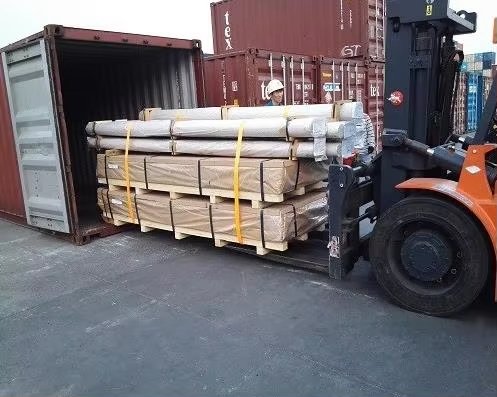
Packaging is especially important for 4×8 aluminum sheets because the large surface can be scratched, stained, or bent during handling. For export orders, confirm the packing plan before payment and shipment.
- Wooden pallet or wooden case suitable for forklift handling.
- Waterproof paper or plastic film to reduce moisture risk.
- Corner protection to prevent edge damage.
- Steel belt or strong strapping to keep sheets stable.
- Clear labels showing alloy, temper, thickness, size, quantity, and batch number.
- Container loading plan to avoid movement during long-distance shipping.
Shipping cost depends on total weight, packing volume, destination port, shipping method, and whether the order is LCL or FCL. For mixed thicknesses or mixed grades, ask the supplier to separate labels clearly so the warehouse can identify each item after arrival.
Export Experience: Common Buyer Preferences by Market
Different markets often use different standards, thickness descriptions, and purchasing habits. The patterns below can help buyers prepare clearer inquiries and reduce quotation errors.
| Market | Common Preference | Quotation Tip |
| North America | Inch thickness such as 0.063 in, 0.080 in, 0.125 in; ASTM B209 is often referenced. | Confirm inch-to-mm conversion and tolerance. |
| Europe | Metric thickness, EN standards, surface quality, and documentation are often important. | Confirm EN 485 or requested material certificate. |
| Middle East | Construction panels, painted or anodized sheets, and export packing are common concerns. | Confirm surface finish, film, and packing strength. |
| Southeast Asia | Cost-effective 3003 or 5052 sheets and mixed-size orders are common. | Confirm stock sizes, MOQ, and mixed-grade packing. |
| Marine markets | 5052 and 5083 are commonly requested for corrosion resistance. | Confirm welding, saltwater exposure, and MTC requirements. |
Still Comparing Aluminum Materials? Learn from This Project
Example structure for a truck body manufacturer: the customer needs lightweight panels with good corrosion resistance and stable forming performance. Instead of choosing by price only, the supplier checks bending, fastening, exposure environment, and surface requirement, then recommends a suitable 5052 sheet thickness with protective film and export pallet packing.
Buying Checklist Before Requesting a Quote
Clear specifications help suppliers provide faster and more accurate quotations. Before placing an order, buyers should confirm the following details.
| Item | What to Confirm |
| Size | 4×8 ft, 48×96 in, or 1220×2440 mm |
| Thickness | Inches, millimeters, or gauge |
| Alloy | 3003, 5052, 5083, 6061, 7075, etc. |
| Temper | O, H14, H24, H32, T6 |
| Surface | Mill finish, anodized, brushed, painted, embossed, PVC film |
| Quantity | Pieces, sheets, tons, or container quantity |
| Tolerance | Thickness, width, length, flatness |
| Standard | ASTM B209, EN 485, GB/T 3880, or other required standard |
| Processing | Cutting, bending, drilling, laser cutting, CNC cutting, film protection |
| Packaging | Standard pallet, export wooden pallet, waterproof packaging |
| Documents | MTC, SGS/TUV inspection, certificate of origin, packing list |
Why Choose ZGGD Metal Aluminum Sheet Supplier?
Zggdmetal is a factory-direct aluminum sheet supplier located in Shunde, Foshan. We provide stable supply, custom cutting, material traceability, export packaging, and OEM bulk services for standard 4×8 ft aluminum sheets and non-standard custom aluminum sheet orders.
We supply commonly used aluminum sheet grades such as 3003, 5052, 5083, 6061, 6063, and 7075. We can recommend suitable alloys, tempers, and size solutions based on customers’ application scenarios, thickness requirements, surface finish requirements, and processing methods.
zggdmetal‘s Supply Capabilities
- Factory Direct Supply: Supply from our factory in Shunde, Foshan. We support custom cutting of standard and non-standard sizes.
- Common Grades: 3003, 5052, 5083, 6061, 6063, and 7075 aluminum sheets are available.
- Material Traceability: MTC material testing certificates can be provided upon order request.
- Surface Treatment: Supports natural color, brushed finish, anodizing, spray painting, embossing, and protective film.
- Export Packaging: Supports wooden pallets, waterproof paper, corner protectors, packing straps, and shipping marks.
- Certification Support: ISO 9001, SGS, TUV, CE, RoHS, and other relevant documentation available.
- Inventory Capacity: Maintains approximately 20,000 tons of stock for rapid production scheduling and delivery.
- Export Experience: Products are exported to over 40 countries and regions, covering markets in South America, Africa, and Southeast Asia.
- Processing Equipment: Equipped with 4 uncoilers, 8 levelers, 24 laser cutters, and 12 stamping machines, supporting cutting, leveling, laser cutting, stamping, and other processing needs.
Get a Factory Quote
Do you need standard 4×8-foot aluminum sheets or custom-sized sheets? Please provide the alloy grade, temper, thickness, dimensions, quantity, surface treatment requirements, and port of destination. We can provide you with a factory quote within 24 hours and support MTC material certificates, export packaging, OEM services and custom cutting.
FAQ About 4×8 Aluminum Sheet
What is the standard size of a 4×8 aluminum sheet?
A 4×8 aluminum sheet is 4 feet wide and 8 feet long, equal to 48 x 96 inches or approximately 1220 x 2440 mm.
What thickness is best for a 4×8 aluminum sheet?
It depends on the application. Thin sheets such as 1 mm are suitable for light panels and signs. Medium thicknesses such as 2 mm to 3 mm are common for fabrication. Thicker sheets such as 4 mm to 6 mm are better for heavy-duty panels and structural uses.
How much does a 4×8 aluminum sheet weigh?
A 1 mm 4×8 aluminum sheet weighs about 8 kg. A 3 mm sheet weighs about 24 kg. Actual weight depends on alloy density, tolerance, and exact size.
Which aluminum grade is best for 4×8 sheet?
3003 aluminum sheet is good for general fabrication, 5052 aluminum sheet is better for corrosion resistance, and 6061 is suitable for stronger structural or machined parts.
Why do aluminum sheet 4×8 prices vary?
Prices vary because of alloy, thickness, temper, surface finish, order quantity, processing requirements, packaging, and raw aluminum market changes.
Is 4×8 aluminum sheet suitable for outdoor use?
Yes. Aluminum has good corrosion resistance. For outdoor or marine environments, 5052, 5083, or properly coated aluminum sheets are often preferred.
Can aluminum sheet be laser cut or CNC cut?
Yes. Aluminum sheet can be laser cut, CNC cut, drilled, punched, or bent. The best processing method depends on thickness, alloy, tolerance, and edge requirement.
Can 4×8 aluminum sheet be anodized or powder coated?
Yes. Many aluminum sheets can be anodized, painted, or powder coated. Surface preparation, alloy selection, and finish requirements should be confirmed before production.
Can aluminum sheet be bent?
Yes, but bending performance depends on alloy, temper, thickness, and bend radius. Softer tempers are usually easier to bend than harder tempers such as T6.
Can aluminum sheet be welded?
Many aluminum sheets can be welded, especially 5052, 5083, and 6061. Welding method and filler material should match the alloy and application.
Can I order mixed grades or mixed thicknesses?
Yes, many suppliers can support mixed grades and mixed thicknesses. Ask for clear labels and separated packing to avoid warehouse confusion after delivery.
Do you provide Mill Test Certificate?
MTC can usually be provided for industrial and export orders. Confirm the required standard, alloy, temper, and certificate format before purchase.
How do you package export orders?
Common export packing includes wooden pallets, waterproof paper, plastic film, corner protection, steel belts, labels, and shipping marks.
Can I buy one sheet?
It depends on supplier stock, MOQ, cutting requirements, and shipping method. For international shipping, small orders may have higher unit freight cost.
Conclusion
A 4×8 aluminum sheet is a practical and widely used material size, but buyers should not choose based on size alone. Thickness, alloy grade, temper, surface finish, tolerance, application, processing method, packing, and price factors all affect final performance and total cost.
If you need standard or custom 4×8 aluminum sheets, visit our aluminum sheet and plate catalog or send your alloy, temper, thickness, size, quantity, surface finish, and destination port for a factory quotation.