
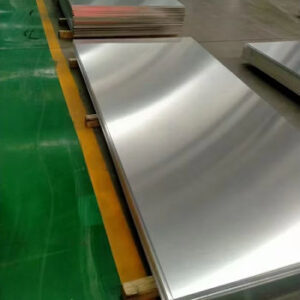
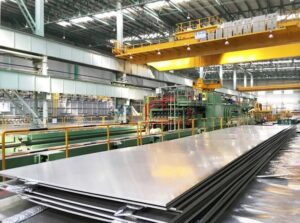
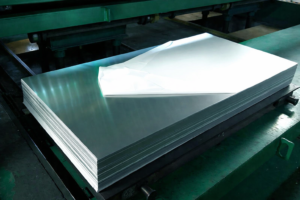
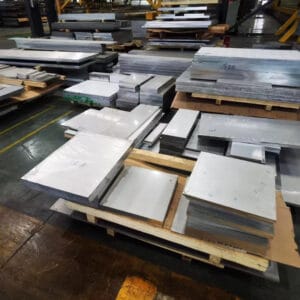
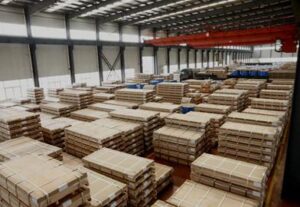
What Is 5051 Aluminum?
5051 aluminum is a 5000 series aluminum-magnesium alloy used where moderate strength, good formability, weldability, and corrosion resistance are required. Like other 5xxx aluminum alloys, 5051 is not strengthened by heat treatment. Instead, its strength is improved mainly through cold working, which is why tempers such as H32 and H34 are commonly discussed when buyers source 5051 aluminum sheet.
The main alloying element in aluminum 5051 is magnesium. This gives the alloy better strength and corrosion resistance than many commercially pure aluminum grades, while still keeping it practical for cutting, bending, forming, welding, and sheet metal fabrication.
In commercial purchasing, 5051 aluminum is often compared with 5052, 5251, 5754, and other 5000 alloys. However, these grades are not automatically interchangeable. The correct choice depends on the required alloy standard, temper, thickness, mechanical properties, surface finish, and final application.
If you are sourcing material for formed parts, transportation panels, industrial fabrication, or corrosion-resistant sheet applications, you can review our 5051 aluminum sheet options and confirm the right specification before ordering.
5051 Aluminum Chemical Composition
5051 aluminum belongs to the aluminum-magnesium alloy family. Its registered composition is based on aluminum as the balance, with magnesium as the main strengthening element and controlled limits for silicon, iron, copper, manganese, chromium, zinc, titanium, and other elements.
A typical composition range for 5051 aluminum includes:
| Silicon | 0.40 max |
| Iron | 0.70 max |
| Copper | 0.25 max |
| Manganese | 0.20 max |
| Magnesium | 1.7-2.2 |
| Chromium | 0.10 max |
| Zinc | 0.25 max |
| Titanium | 0.10 max |
| Other elements, each | 0.05 max |
| Other elements, total | 0.15 max |
| Aluminum | Balance |
This composition explains why 5051 aluminum offers a balanced combination of corrosion resistance, formability, weldability, and moderate strength. The relatively low copper content helps maintain corrosion resistance, while magnesium improves strength without making the alloy too difficult to fabricate.
For technical reference, alloy designations and standards can be checked through recognized industry sources such as the Aluminum Association standards. In purchasing practice, however, buyers should always request a mill test certificate from the supplier to confirm the actual chemical composition of the delivered material.
Key Properties of 5051 Aluminum
5051 aluminum is selected because it offers a practical balance of performance and workability. It is not the strongest aluminum alloy, but it is useful in applications where corrosion resistance, forming, welding, and stable sheet quality are more important than very high tensile strength.
Good corrosion resistance
As a 5000 series aluminum-magnesium alloy, 5051 has good resistance to atmospheric corrosion, humid environments, and many general outdoor conditions. It is suitable for transportation, industrial panels, covers, enclosures, and marine-adjacent applications.
Moderate strength
5051 aluminum provides better strength than many pure aluminum grades while remaining easier to form than many high-strength aluminum alloys. For applications requiring more rigidity, H34 or harder tempers may be considered.
Good formability
5051 aluminum sheet can be cut, bent, punched, rolled, and formed with proper tooling. Softer tempers provide better formability, while harder tempers offer higher strength and stiffness.
Good weldability
5051 aluminum is generally weldable using common aluminum welding processes. However, as with many strain-hardened aluminum alloys, welding may reduce strength in the heat-affected zone. If the final part is welded, the design should consider joint strength and post-weld performance.
Lightweight performance
5051 aluminum has a low density compared with steel, making it suitable for applications where reducing weight is important. This is one reason it is used in transportation panels, sheet metal parts, protective covers, and fabricated structures.
H32 and H34 Temper: What Buyers Should Know
Temper is one of the most important details when buying 5051 aluminum sheet. The same alloy can behave very differently depending on whether it is supplied in O, H32, H34, or another temper.
The “H” temper indicates strain-hardened material. H32 and H34 are both strain-hardened and partially annealed conditions, but H34 is generally harder and stronger than H32.
| Temper | General Meaning | Recommended Use |
|---|---|---|
| 5051-O | Annealed, soft condition | Deep forming, complex bending, maximum ductility |
| 5051-H32 | Quarter-hard, balanced strength and formability | General sheet fabrication, bending, panels |
| 5051-H34 | Half-hard, higher strength and stiffness | Covers, enclosures, flatter panels, less severe forming |
| 5051-H36/H38 | Higher hardness | Rigid panels, limited forming applications |
For many buyers, 5051-H32 is the safer starting point if bending or forming is required. 5051-H34 is better when the final product needs more stiffness and the forming process is not too severe.
5051 vs 5052 Aluminum: Which One Should You Choose?
5051 and 5052 aluminum are both 5000 series aluminum-magnesium alloys, but they are not the same material. Buyers often compare them because 5052 is more widely available in many markets, while 5051 may be required by specific drawings or customer specifications.
| Item | 5051 Aluminum | 5052 Aluminum |
|---|---|---|
| Alloy family | 5xxx Al-Mg alloy | 5xxx Al-Mg alloy |
| Main alloying element | Magnesium | Magnesium |
| Strength level | Moderate | Usually higher than 5051 |
| Formability | Good | Good, but stronger tempers may be stiffer |
| Corrosion resistance | Good | Very good, especially for marine and outdoor uses |
| Common tempers | O, H32, H34 | O, H32, H34, H36, H38 |
| Availability | Less common in some markets | More commonly stocked globally |
| Best use case | Formed panels, transportation parts, general corrosion-resistant sheet | Marine parts, tanks, panels, enclosures, stronger sheet applications |
If your drawing clearly requires 5051 aluminum, do not accept 5052 as a casual replacement without approval. Although 5052 may offer higher strength and stronger corrosion resistance in many situations, it is a different alloy with different composition limits and performance characteristics.
If your project is performance-based rather than grade-specific, 5052 may sometimes be considered as an alternative. In that case, compare alloy, temper, thickness, mechanical properties, forming requirements, surface finish, and price before making the final decision.
Equivalent Grades and Alternative Alloys
When sourcing aluminium 5051, buyers often ask whether other grades can be used as equivalents. The answer depends on the standard and application.
| Grade | Relationship to 5051 | Buying Note |
|---|---|---|
| 5051 | Main alloy grade | Use when drawings or specifications require 5051 |
| 5051A | Related 5000 alloy | Similar family, but not identical composition |
| 5251 | Comparable Al-Mg sheet alloy | May be considered if approved |
| 5052 | Higher magnesium content | Stronger and more common, but not a direct equivalent |
| 5754 | Common 5000 sheet alloy | Often used in transport and marine applications |
| 5083/5086 | Higher-strength marine alloys | Suitable for more demanding marine or structural uses |
The safest purchasing language is “alternative alloy,” not “direct equivalent,” unless the substitution is approved by engineering or by the required standard.
Common Applications of 5051 Aluminum Sheet
5051 aluminum sheet is used in applications where buyers need corrosion resistance, moderate strength, forming performance, and lightweight sheet fabrication.
Transportation panels
5051 aluminum sheet can be used for vehicle panels, trailer parts, access covers, internal structures, and lightweight fabricated components.
Marine-adjacent components
For covers, cabinets, lockers, dock accessories, and coastal equipment, 5051 aluminum offers useful corrosion resistance. For more aggressive seawater service, buyers may compare it with 5052, 5754, 5083, or 5086.
Industrial sheet metal
5051 is suitable for machine covers, toolboxes, guards, enclosures, HVAC panels, cabinets, and general fabricated parts.
Outdoor and architectural parts
5051 aluminum sheet can be used for signs, trim, panels, roof accessories, and outdoor structures where corrosion resistance and appearance matter.
Storage and process equipment
Because 5000 aluminum alloys are known for corrosion resistance and weldability, 5051 may be considered for tanks, covers, and related fabricated equipment, depending on the design requirements.
Factory Experience from Zggdetal
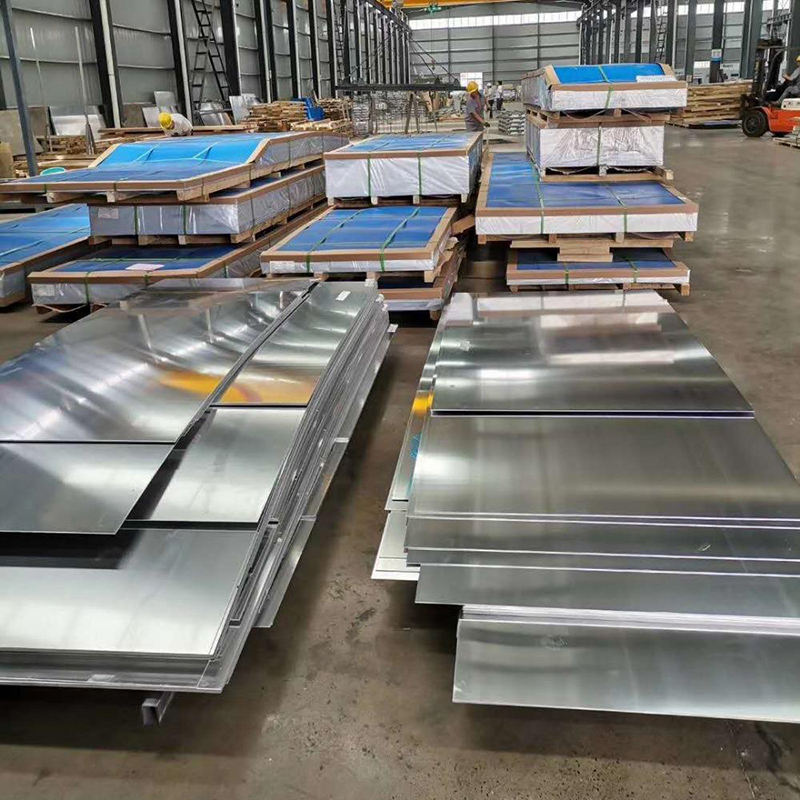
From factory-side supply experience, many 5051 aluminum sheet inquiries are not only about price. Buyers usually need help confirming whether the alloy and temper match their cutting, bending, welding, surface, and delivery requirements.
At Zggdmetal, 5051 aluminum sheet orders are usually discussed around several practical details:
- Whether the project needs 5051 exactly or can accept an approved 5xxx alternative
- Whether H32 or H34 is more suitable for the forming process
- Whether the sheet will be bent, welded, laser cut, punched, anodized, or painted
- Whether surface protection film is required
- Whether cut-to-size service can reduce processing loss
- Whether export packing needs moisture protection, wooden pallets, or reinforced packaging
- Whether a mill test certificate is required for quality traceability
This matters because two sheets with the same alloy name may perform differently if temper, flatness, surface protection, and tolerance are not controlled. For import buyers, the best result usually comes from sharing the end-use drawing, required thickness, temper, surface finish, and order quantity before quotation.
You can check the product details on our 5051 aluminum sheet page and send your required specification for confirmation.
Common Buying Mistakes When Sourcing 5051 Aluminum Sheet
1. Treating 5051 and 5052 as the same material
5051 and 5052 are similar, but they are not identical. If your drawing says 5051 aluminum, confirm whether substitution is allowed before purchasing.
2. Ignoring the temper
Many problems come from specifying only “5051 aluminum sheet” without temper. O, H32, and H34 have different strength and forming behavior.
3. Buying only by lowest price
A lower price may come from thinner actual gauge, loose tolerance, poor flatness, surface defects, weak packaging, or unclear certification.
4. Not confirming surface requirements
For visible panels, cabinets, covers, and decorative parts, surface quality should be specified before production.
5. Forgetting the processing method
A sheet used for flat covers does not have the same requirement as a sheet used for bending, deep forming, or welding.
6. Not asking for certification
For industrial, transportation, or export projects, a mill test certificate helps confirm alloy, temper, chemical composition, and traceability.
Optimized Buying Guide for 5051 Aluminum Sheet
When buying 5051 aluminum sheet, the best quotation is not just the cheapest price per kilogram. A useful quotation should help reduce processing risk, control quality, and make sure the delivered material matches the application.
Step 1: Confirm the alloy requirement
Start by confirming whether your project requires 5051, 5051A, or another approved 5xxx alloy. If the grade is specified by a drawing or customer standard, do not change it without written approval.
Recommended purchase wording:
Material: 5051 aluminum sheet, temper H32/H34, with mill test certificate.
Step 2: Select the right temper
Choose the temper based on how the sheet will be processed. Use O temper for maximum formability, H32 for balanced fabrication, and H34 for higher stiffness.
Step 3: Define thickness, width, length, and tolerance
Provide exact dimensions, quantity, tolerance requirement, flatness requirement, and edge condition. For cut-to-size orders, confirm whether shearing, slitting, or custom cutting is available.
Step 4: Confirm surface finish and protection
Common requirements include mill finish, PVC/PE film protection, brushed surface, anodizing-quality surface, coating-ready surface, or scratch-sensitive packaging.
Step 5: Match the material to the fabrication process
Tell the supplier if the sheet will be bent, laser cut, punched, welded, deep drawn, polished, anodized, painted, or used outdoors.
Step 6: Ask for documents and traceability
Request a mill test certificate, alloy and temper confirmation, chemical composition, mechanical properties if required, heat number, packing list, and export documents.
Step 7: Evaluate supplier capability, not only inventory
A good supplier should help confirm material suitability, offer stable sheet quality, protect the surface during packing, and support repeat orders.
Our Recommendation
If you are not sure which 5051 aluminum sheet temper to choose, start with the application.
For bending, forming, and general sheet metal fabrication, 5051-H32 is usually the most practical choice because it provides a good balance between strength and workability.
For flatter panels, covers, enclosures, and parts that need slightly higher rigidity, 5051-H34 may be more suitable.
For deep forming or complex shapes, consider 5051-O or ask the supplier to confirm the minimum bend radius before ordering.
If the project will be exposed to marine or highly corrosive environments, compare 5051 with 5052, 5754, 5083, or 5086 before final selection. 5051 is a good corrosion-resistant sheet alloy, but some applications may require a stronger or more marine-focused 5000 grade.
For most buyers, the recommended purchase path is:
Confirm application → choose alloy → choose temper → confirm thickness and tolerance → define surface finish → request certificate → confirm packing and delivery.
This process helps avoid material mismatch, forming failure, surface complaints, and unnecessary purchasing risk.
FAQ About 5051 Aluminum
Is 5051 aluminum the same as 5052?
No. 5051 and 5052 are both 5000 aluminum-magnesium alloys, but they have different composition limits and performance characteristics.
Is 5051 aluminum heat treatable?
No. 5051 aluminum is a non-heat-treatable alloy. It is strengthened mainly by cold working.
What is 5051 aluminum sheet used for?
It is used for transportation panels, industrial sheet metal, marine-adjacent parts, enclosures, covers, outdoor components, and corrosion-resistant fabricated parts.
Which is better, 5051-H32 or 5051-H34?
H32 is better for balanced forming and strength. H34 is stronger and stiffer, but less suitable for severe forming.
Can 5051 aluminum be welded?
Yes. 5051 aluminum is generally weldable, but welding may reduce strength in the heat-affected zone.
Conclusion
5051 aluminum is a practical 5xxx aluminum-magnesium alloy for buyers who need corrosion resistance, moderate strength, good formability, and weldable sheet performance. It is especially suitable for transportation panels, industrial fabrication, outdoor components, covers, enclosures, and general corrosion-resistant sheet applications.
The most important buying advice is to confirm more than the alloy name. A proper 5051 aluminum sheet order should include alloy, temper, thickness, tolerance, surface finish, certification, packaging, and delivery requirements. If a supplier recommends 5052, 5251, 5754, or another alternative, ask for a written comparison before approving substitution.
Looking for reliable 5051 aluminum sheet for forming, transportation panels, industrial fabrication, or corrosion-resistant applications?
Visit our 5051 aluminum sheet product page to check product details, or send us your required alloy, temper, thickness, width, length, surface finish, and quantity. Zggdmetal can help you confirm the right specification, compare 5051 with alternative 5xxx alloys, and provide a quotation based on your real processing and delivery requirements.