
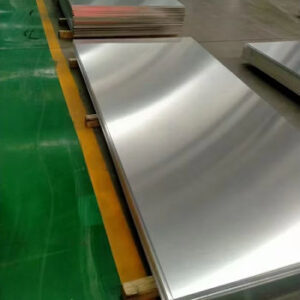
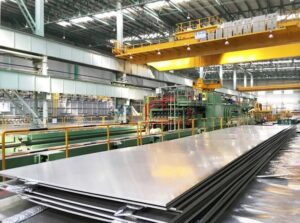
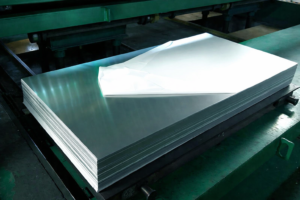
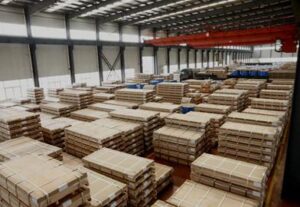
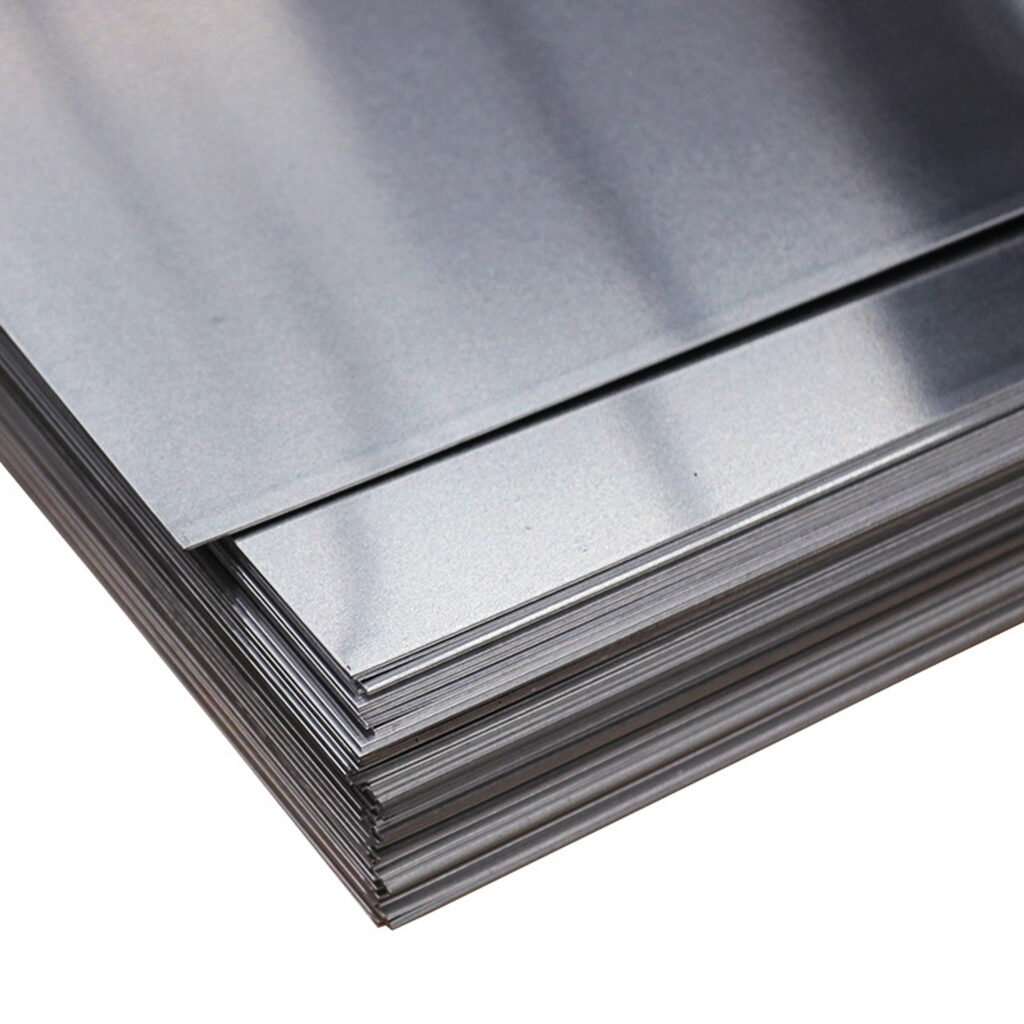
4047 Aluminum Sheet is a high-silicon aluminum alloy from the 4000 series, specifically developed to improve welding and brazing reliability rather than chasing extreme mechanical strength. With a silicon content of approximately 11–13%, this alloy delivers controlled melting behavior, smooth weld formation, and consistent joint quality in demanding fabrication environments.
Unlike heat-treatable aluminum alloys, 4047 aluminum focuses on process stability, making it a preferred material where weld appearance, joint integrity, and thermal consistency matter more than post-processing strength enhancement.
Why High-Silicon 4047 Aluminum Sheet Performs Better in Welding
The performance advantage of 4047 aluminum sheet starts at the metallurgical level.
Higher silicon content directly lowers the melting point and improves molten metal fluidity.
Why this matters in real production:
- Better flow allows molten aluminum to fully wet joint gaps, reducing incomplete fusion.
- Uniform solidification minimizes shrinkage stress, lowering crack formation risk.
- Smoother weld beads reduce secondary machining or cosmetic correction.
From an engineering perspective, this means less trial-and-error during welding setup and more predictable outcomes in serial production.
Low Melting Point: Designed for Brazing and Laser Welding
The relatively low melting temperature of 4047 aluminum sheet is not accidental—it is purpose-built for brazing and precision welding applications.
In a typical brazed aluminum assembly or laser-welded cover plate scenario:
- Lower heat input reduces distortion on thin substrates.
- Heat-affected zones remain narrow, preserving dimensional accuracy.
- Adjacent components experience less thermal stress
For manufacturers focused on tight tolerances and high yield rates, this thermal behavior translates directly into process efficiency and cost control.
Corrosion Resistance Driven by Weld Quality, Not Just Chemistry
While aluminum alloys are generally corrosion-resistant, 4047 aluminum sheet achieves long-term durability through a different mechanism.
Because weld seams are smoother and more uniform:
- Micro-galvanic differences along the joint are reduced
- Fewer defects mean fewer initiation points for corrosion.
- Welded assemblies remain stable even in high-temperature or harsh environments.
This makes 4047 aluminum sheet especially suitable for components where weld zones define service life, not just base material composition.
Thermal Stability for Heat Management Applications
4047 aluminum sheet maintains stable performance under repeated thermal cycling.
This is particularly valuable in heat dissipation systems where materials are exposed to continuous temperature fluctuations.
From a functional standpoint:
- Thermal expansion behavior remains predictable.
- Joints retain integrity under long-term heat exposure
- System reliability improves without adding structural complexity
This balance of lightweight and thermal consistency supports its use in advanced thermal management designs.
Lightweight Aluminum Solution for Precision Industries
Although lightweight is a standard aluminum advantage, 4047 aluminum sheet extends this benefit by ensuring that reduced weight does not compromise joint reliability.
From different perspectives:
- Material view: optimized melting behavior enhances joining performance
- User view: fewer weld defects, lower rework rates
- Industry trend view: increasing demand for precision welding over raw strength
This makes 4047 aluminum sheet a practical choice for aerospace components, precision housings, and high-accuracy structural assemblies.
Key Advantages of 4047 Aluminum Sheet
- High silicon content (11–13%) for improved weld fluidity
- Low melting point ideal for brazing and laser welding
- Smooth, bright weld seams with minimal defects
- Excellent corrosion resistance in welded areas
- Stable thermal performance for heat management systems
- Lightweight aluminum structure supporting precision engineering needs
4047 Aluminum Sheet for Reliable Manufacturing Outcomes
Choosing 4047 aluminum sheet is less about chasing peak material strength and more about ensuring repeatable, controllable, and high-quality joining results. For manufacturers who value consistency, efficiency, and long-term performance, it offers a technically sound and commercially practical solution.